It’s not just enterprises processing data in the cloud that are coming to terms with a dynamic distribution of compute resources. In 2026, the enterprise technology landscape is wrought with a fundamental shift from a centralized cloud-only processing model toward a hybrid approach that is more dynamic and adaptable.
The role of artificial intelligence has also experienced a dramatic evolution in the same timeframe. AI is no longer just software experimentation and prototypes. It is a real-world technology deployed across manufacturing floors, research labs, logistics terminals, and engineering spaces. This migration is spurred by the advent of a new category of hardware specifically engineered for demanding workloads that call for heavy compute and real-time processing.
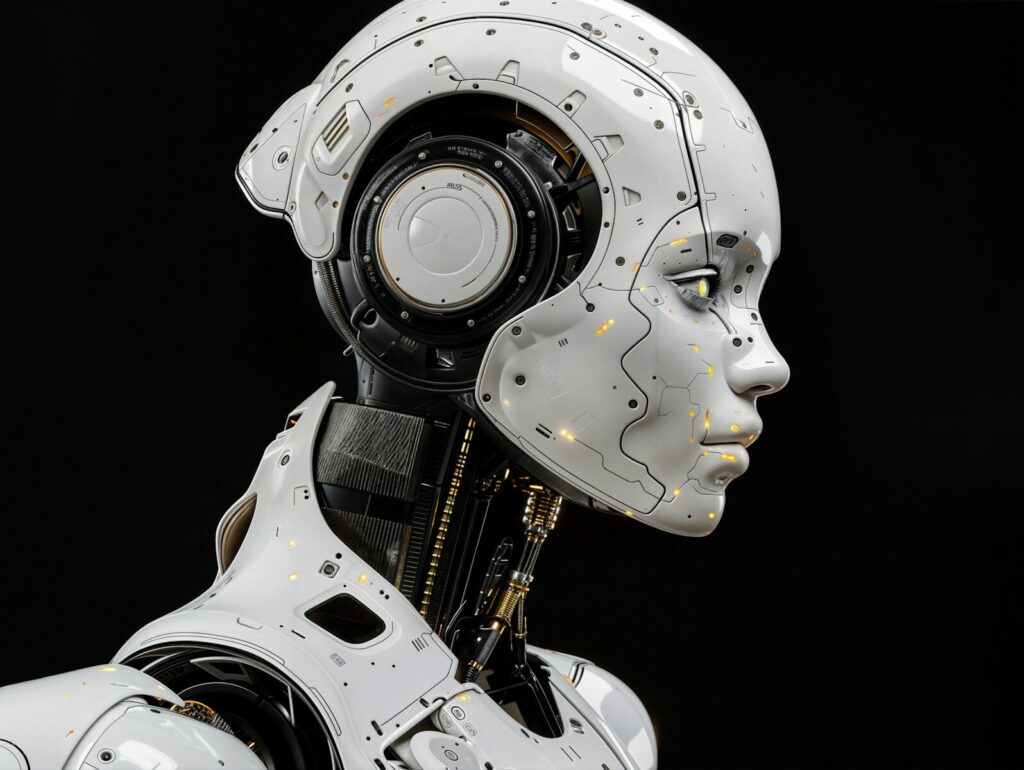
Transcending the changing operational needs of modern machine learning initiatives, high-performance and adaptable sources of robotics technology are becoming a strategic priority for organizations. Vendors such as AI Robot Supplier are positioned to provide an essential link between the manufacturing of this specialized hardware and the deployment of such new technology in the industrial context.
Why AI Hardware Demand Is Increasing
The exponential growth of modern computational models—ranging from multi-modal generative networks to physical vision-language-action (VLA) models—has strained traditional compute frameworks. While cloud computing offered flexibility during the early testing phases of corporate adoption, the financial and operational reality of running complex inference model pipelines 24/7 in the cloud has driven many organizations toward local hardware acquisition.
Several pivotal factors drive this massive surge in local compute demand:
- Latency Reduction for Real-Time Systems: Autonomous machinery, precision surgical instruments, and automated assembly systems require sub-millisecond response times that public cloud network round-trips simply cannot deliver consistently.
- Data Privacy, Security, and Compliance: Proprietary manufacturing processes, healthcare records, and confidential engineering schematics carry stringent regulatory mandates. Local processing keeps sensitive IP strictly behind corporate firewalls.
- Operational Cost Predictability: High-density API and cloud processing bills scale unpredictably as workload volume grows. Investing in specialized local hardware converts variable operating expenses into predictable, long-term capital assets.
- Edge Autonomy and Network Resilience: Facilities located in remote regions, deep underground facilities, or off-grid industrial environments cannot afford operational stoppage caused by temporary network disruptions.
Professional GPUs and Local AI Computing
At the center of modern compute infrastructure are high-performance enterprise graphics cards. Modern enterprise workloads demand massive parallel processing capabilities, ultra-fast memory bandwidth, and specialized tensor execution cores designed specifically for dense matrix operations. For specialized deep learning workflows, research teams heavily rely on enterprise-grade professional graphics cards to train specialized domain models, execute simulation pipelines, and manage localized multi-agent workflows.
Unlike consumer-focused graphics hardware, enterprise accelerator cards offer critical features designed for continuous high-throughput engineering demands:
- ECC Memory Integrity: Error-Correcting Code (ECC) memory prevents silent data corruption during long multi-day training runs or mathematical simulations.
- High VRAM Capacity: Large onboard VRAM buffers enable teams to load complete 70B+ parameter models directly into memory without offloading bottlenecks.
- Enterprise Drivers & Software Ecosystem: Validated software stacks, long-term support cycles, and multi-GPU cluster scaling ensure maximum stability for critical tasks.
Local compute hubs outfitted with high-end cards empower engineering teams to rapidly iterate on designs, fine-tune open-weights models, and process proprietary dataset pipelines without exposing data externally or waiting in queue for cloud server availability.
Robotics and Automation in Real-World Industries
While local hardware provides the computational brainpower, physical automation acts as the functional hands of modern enterprise technology. The integration of advanced foundation models into physical mechanics has elevated machinery from basic rule-following automation to adaptable cognitive systems. Across diverse industrial sectors, modern AI robots and robotics systems are reshaping daily operational workflows.
Manufacturing and Assembly
Modern production facilities utilize adaptive robotic arms equipped with real-time vision processing. Rather than requiring rigid, fixed programming for every millimeter of movement, these units adapt to subtle variations in component position, inspect parts for structural defects mid-assembly, and work safely alongside human technicians.
Logistics and Supply Chain
Autonomous Mobile Robots (AMRs) now navigate complex warehouse environments independently. Using localized simultaneous localization and mapping (SLAM) algorithms powered by onboard processors, these systems continuously optimize routing, dynamic obstacle avoidance, and inventory tallying in real time.
Scientific Research and Engineering
In materials science and pharmaceuticals, high-throughput robotic liquid handling systems and automated testing rigs execute thousands of precise physical experiments daily. By running continuously under AI supervision, these systems dramatically compress product development cycles.
How Businesses Should Evaluate AI Hardware
Navigating the complex landscape of hardware selection requires a clear, structured methodology. Enterprise leaders must evaluate several key operational metrics before committing capital investments:
- Workload Profile & Architecture: Determine whether your primary need lies in large-scale model training or low-power real-time edge inference. Match software requirements directly with GPU architecture and VRAM memory bandwidth.
- Power and Thermal Infrastructure: High-density accelerator racks generate substantial heat and demand high-power delivery. Facilities must be evaluated for thermal handling and adequate power delivery before installation.
- System Interoperability & Software Ecosystem: Ensure hardware supports open frameworks, containerized deployments, standard ROS (Robot Operating System) builds, and robust developer toolkits.
- Total Cost of Ownership (TCO): Factor in initial procurement, power consumption, facility cooling, software maintenance, and estimated hardware replacement lifecycles against projected cloud savings.
Future Outlook for AI Infrastructure and Robotics
As enterprise computing matures through 2026 and beyond, the boundary between local edge computation and physical robotics will continue to blur. Emerging trends point toward fully autonomous industrial environments where edge nodes process real-time environmental data, continuously re-train localized task models, and wirelessly deploy updated weights to fleets of working robots.
Organizations that build scalable, resilient local computing foundations today position themselves to adapt rapidly to incoming breakthroughs. By combining robust professional graphics hardware with versatile robotic platforms, forward-thinking enterprises are building competitive advantages rooted in speed, operational autonomy, and data privacy.