Introduction
You’re scrolling through your messages when a notification pops up: “wygg?” It looks simple, almost casual—but you pause for a moment. What does it actually mean? Should you respond immediately, or is it something deeper than it looks?
In today’s fast-moving digital world, short forms like WYGG are becoming a natural part of online conversations. People use them to save time, express curiosity, or casually check in with someone. But for those who aren’t familiar with modern texting slang, these abbreviations can feel confusing or even misleading.
WYGG is one such term that often appears in chats, especially among younger users on platforms like Snapchat, Instagram, and WhatsApp. Understanding it is not just about decoding letters—it’s about understanding tone, intention, and social connection in digital communication.
In this article, we’ll break down WYGG in detail, explore its meaning, usage, emotional tone, real-life examples, and even the common mistakes people make when interpreting it. By the end, you’ll not only know what WYGG means but also how to respond to it naturally and confidently in conversations.
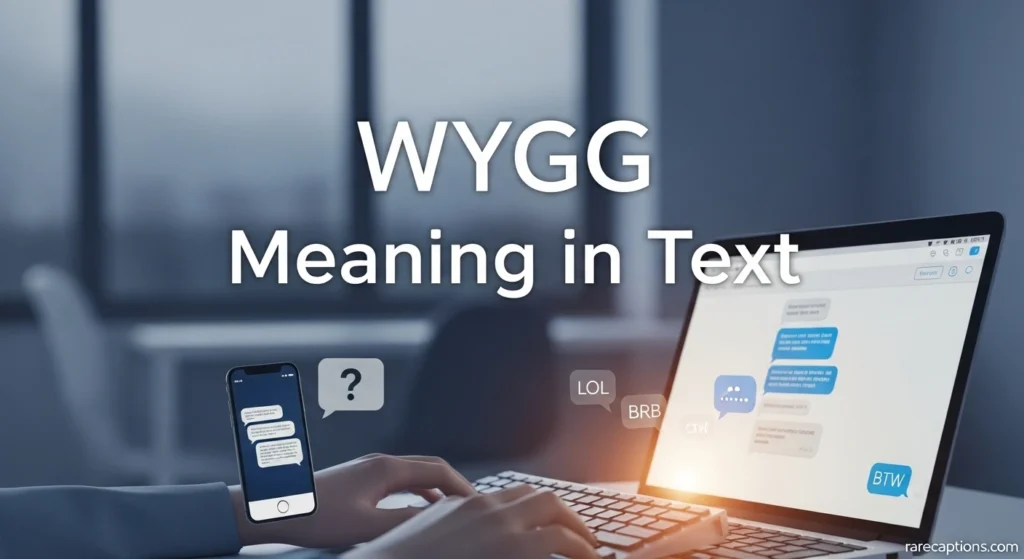
WYGG Meaning in Text Explained
WYGG is commonly interpreted as “What You Got Going (On)?” or “What You Got Going?” It is a casual way of asking someone what they are doing, what their plans are, or how they are currently spending their time.
Unlike formal questions such as “What are you doing?” WYGG feels more relaxed, conversational, and friendly. It often appears in informal chats between friends, acquaintances, or people trying to initiate a light conversation.
For example:
- “Hey, wygg tonight?”
- “WYGG later? Wanna hang out?”
The phrase is flexible. It doesn’t always require a serious answer. Sometimes it’s just a way to open a conversation, check availability, or show interest in someone’s day.
What makes WYGG interesting is its tone. It feels effortless and modern, reflecting how digital communication is becoming shorter but still emotionally expressive. Even though it is only a few letters, it carries curiosity, friendliness, and sometimes even subtle invitation depending on context.
The Origin and Evolution of WYGG
Slang terms like WYGG don’t usually have a fixed origin point. Instead, they evolve naturally from everyday speech shortened into digital form. WYGG likely comes from the spoken phrase “What you got going on?” which is commonly used in casual American English.
As texting and social media became more popular, users began shortening phrases to type faster. WYD (“What you doing?”) became widely popular, and variations like WYGG followed a similar pattern.
The evolution of WYGG reflects a larger trend in digital communication: efficiency mixed with personality. People want to communicate quickly but still sound natural and expressive. So instead of typing full sentences, they compress them into abbreviations that still carry meaning.
Over time, such slang spreads through group chats, memes, and social media interactions. Once enough people understand it, it becomes part of everyday digital language.
WYGG vs Other Similar Slang Terms
To fully understand WYGG, it helps to compare it with similar abbreviations used in texting.
WYD (What You Doing)
WYGG is often confused with WYD. However, WYD focuses strictly on the present moment—what someone is currently doing.
WYGO (What You Got On)
WYGO is another variation that is closer in meaning to WYGG but slightly more vague. It can refer to plans or general activities.
WYA (Where You At)
WYA is location-based, while WYGG is activity-based.
WYGG sits somewhere in the middle. It is not strictly about the present moment nor purely about location. Instead, it asks about someone’s general plans or availability.
This flexibility is why WYGG is popular in casual conversations—it can adapt to many contexts without sounding too specific or too formal.
When and Where WYGG Is Commonly Used
WYGG is mostly used in informal digital spaces. You will rarely see it in professional communication or formal messages.
Common Platforms:
- Snapchat
- Instagram DMs
- WhatsApp chats
- iMessage or SMS
- Gaming chats
Typical Situations:
- Starting a conversation
- Checking if someone is free
- Making plans
- Casual small talk
For example, someone might text “WYGG later?” to see if a friend is available to hang out. It works as both a question and an invitation depending on tone.
Its casual nature makes it ideal for relaxed environments where communication doesn’t need to be formal or detailed.
Emotional Tone Behind WYGG
Although WYGG is just an abbreviation, it carries subtle emotional tones depending on context.
Friendly Curiosity
Most commonly, WYGG expresses simple curiosity. The sender wants to know what the other person is doing in a light, non-intrusive way.
Social Interest
It can also indicate interest in spending time together. If someone asks WYGG, they may be indirectly suggesting plans.
Casual Connection
Sometimes, WYGG is used just to maintain communication without any specific goal. It keeps conversations alive without pressure.
Understanding tone is important because WYGG is not a rigid phrase. Its meaning changes based on who is saying it and how it is used.
Real-Life Chat Examples of WYGG
To understand WYGG better, let’s look at how it appears in real conversations.
Example 1: Casual Check-In
Friend A: “Hey” Friend B: “Hey, wygg?” Friend A: “Just chilling at home.”
Example 2: Making Plans
Person A: “WYGG tonight?” Person B: “Nothing much, why?” Person A: “Let’s go out for food.”
Example 3: Boredom Conversation Starter
“WYGG rn? I’m bored.”
These examples show that WYGG is flexible. It can be used to start chats, suggest plans, or simply break silence.
WYGG in Different Types of Relationships
The meaning of WYGG can slightly shift depending on the relationship between people.
Friends
Among friends, WYGG is usually casual and spontaneous. It often leads to hangouts or casual conversations.
Romantic Interest
In romantic contexts, WYGG may carry more emotional weight. It can be a subtle way of showing interest or initiating conversation.
Acquaintances
With acquaintances, WYGG is often used as polite small talk or to explore possible interaction.
The key factor is familiarity. The closer the relationship, the more casual and meaningful WYGG becomes.
WYGG on Social Media Platforms
Social media plays a major role in spreading slang like WYGG.
On platforms like Snapchat and Instagram, WYGG is often used in quick message exchanges. People prefer short, fast communication, and abbreviations fit perfectly into that style.
On Snapchat, for example, WYGG might appear as part of a streak conversation. On Instagram DMs, it may be used to start casual chats with followers or friends.
Because social media encourages informal interaction, WYGG thrives in these environments.
Common Misunderstandings About WYGG
Many people misinterpret WYGG due to its unfamiliar structure.
Misunderstanding 1: Thinking It Has One Fixed Meaning
WYGG is flexible, not rigid. It doesn’t always mean exactly the same thing in every conversation.
Misunderstanding 2: Confusing It with WYD
While similar, WYGG focuses more on plans and general activity, not just current action.
Misunderstanding 3: Overthinking It
Some people assume WYGG has hidden meanings, but in reality, it is usually very simple and casual.
Understanding context is key to avoiding confusion.
How to Respond to WYGG
Replying to WYGG depends on your situation and interest.
If You Are Free:
“Not much, just relaxing. WYGG?”
If You Are Busy:
“Got some work going on, maybe later.”
If You Want to Hang Out:
“Nothing right now, what’s up?”
The best responses are simple and natural. Since WYGG is informal, your reply should also feel relaxed and conversational.
Cultural and Generational Influence of WYGG
WYGG is part of a broader trend in digital language shaped by younger generations. Teenagers and young adults often create and adopt slang that prioritizes speed, creativity, and social bonding.
Older generations may find it confusing at first, but over time, such terms often enter mainstream usage or get replaced by new ones.
WYGG reflects how language evolves in digital spaces—short, efficient, but still emotionally expressive.
Linguistic Breakdown of WYGG
From a linguistic perspective, WYGG is an acronym formed by compressing a spoken phrase into initials.
- W = What
- Y = You
- G = Got
- G = Going (On)
This structure is common in internet slang, where vowels are often removed and phrases are reduced to initials for faster typing.
Such formations show how digital communication is reshaping language patterns, prioritizing speed while preserving meaning.
Practical Lessons from WYGG in Digital Communication
WYGG teaches us more than just slang—it reflects how communication is evolving.
First, it shows that language is becoming more adaptive. People prefer short expressions that still carry emotional meaning. Second, it highlights the importance of context. A simple phrase can mean different things depending on tone and relationship.
Finally, WYGG reminds us that communication is not just about words, but connection. Even a short message can open conversations, build relationships, and maintain social bonds.
Conclusion
WYGG may look like a random string of letters, but in the world of modern texting, it carries a simple yet meaningful purpose. It stands for “What You Got Going (On)?” and is widely used as a casual way to check in, start conversations, or suggest plans.
Its flexibility makes it popular across social media and messaging platforms, especially among younger users. However, its true meaning always depends on context, tone, and relationship between the people communicating.
Understanding WYGG is not just about decoding slang—it’s about understanding how digital communication is evolving into something faster, shorter, and more expressive. Once you recognize its meaning and usage, you can respond naturally and confidently in everyday chats.
FAQs
What does WYGG mean in text?
WYGG means “What You Got Going (On)?” and is used to ask someone what they are doing or what their plans are.
Is WYGG the same as WYD?
No, WYD means “What You Doing,” focusing on current activity, while WYGG refers more to general plans or availability.
Where is WYGG commonly used?
It is mostly used in casual chats on Snapchat, Instagram, WhatsApp, and other messaging apps.
Is WYGG formal or informal?
WYGG is completely informal and should only be used in casual conversations.
Can WYGG be used in professional settings?
No, it is not appropriate for professional or formal communication.
How should I respond to WYGG?
You can reply based on your situation, such as sharing your plans or asking back what the other person is doing.
Is WYGG widely used?
It is moderately popular in texting culture, especially among younger users and social media communities.