You’re scrolling through your phone late at night when a message pops up: “WSP?” It’s short, casual, and almost effortless—but it might leave you pausing for a second. What does it mean? Is it a greeting, a question, or just internet slang that everyone else already understands?
In today’s fast-moving digital world, communication has become increasingly abbreviated. People rely on short forms like “LOL,” “BRB,” and “WSP” to keep conversations quick and casual. But while these shortcuts save time, they can also create confusion for those who are not fully familiar with them.
“WSP” is one such commonly used abbreviation in texting and online chats. It carries a simple meaning, yet its usage varies depending on tone, relationship, and context. Understanding it not only helps you decode messages but also improves how you respond in modern digital conversations.
This article explores the meaning of “WSP,” its origins, emotional tone, real-life examples, and how it fits into today’s online communication culture—helping you confidently understand and use it in everyday chats.
1. What Does WSP Mean in Text?
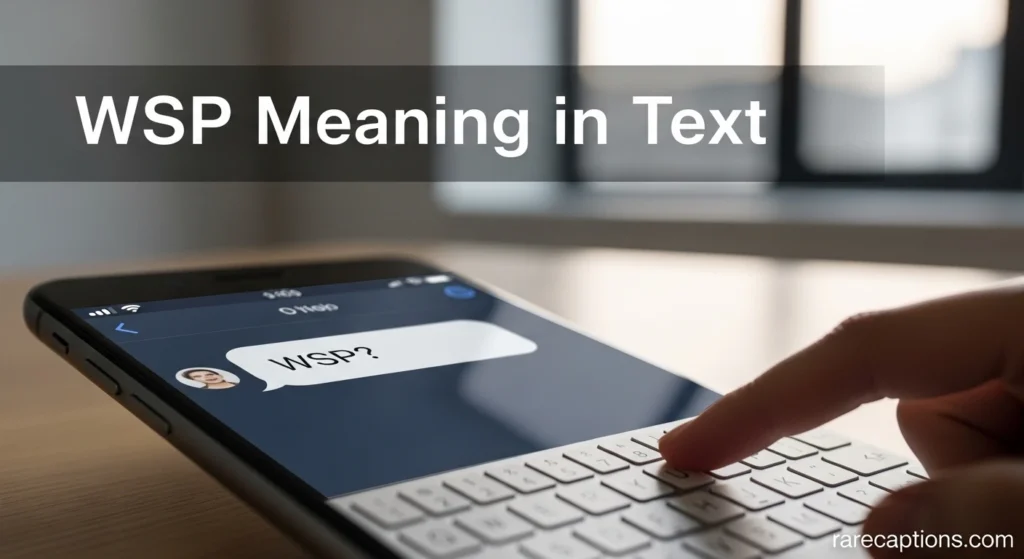
“WSP” is a shortened form of the word “what’s up.” It is commonly used in texting, social media messages, and online chats as a casual greeting or conversation starter.
Instead of typing the full phrase “What’s up?”, people use “WSP” to save time and keep communication informal. It is typically used between friends, acquaintances, or people who share a relaxed relationship.
In most cases, “WSP” does not require a serious answer. It simply means:
- “How are you?”
- “What are you doing?”
- “Anything new?”
For example, if someone texts “WSP?”, they are usually trying to start a conversation rather than ask a specific question.
The beauty of “WSP” lies in its simplicity. It reflects how modern communication prioritizes speed and ease over formality. However, its meaning can slightly shift depending on tone and context, which we will explore further in the next sections.
2. The Origin and Evolution of WSP
The abbreviation “WSP” evolved from internet slang culture that began in early messaging platforms like MSN, Yahoo Messenger, and early SMS texting. Since mobile phones once had strict character limits and slow typing systems, users naturally developed shortcuts.
“What’s up” became “Wsup,” “Wsp,” and eventually standardized into “WSP” in informal digital communication.
As smartphones and social media platforms grew, so did the use of abbreviations. Apps like Snapchat, Instagram, WhatsApp, and TikTok helped popularize slang like WSP among younger users.
Today, WSP is part of a broader digital language system where speed and simplicity dominate. It reflects how language evolves with technology, adapting to new communication habits.
Interestingly, WSP is not officially recognized in formal language dictionaries, but it is widely understood in online culture across different countries and age groups.
3. How WSP is Used in Everyday Conversations
WSP is mostly used as a casual opener in chats. It sets a friendly tone without requiring formality or structure.
Common uses include:
- Starting a conversation
- Checking in on someone
- Breaking silence in a chat
- Casual greeting among friends
Example usage:
- “WSP bro?”
- “WSP, long time no see”
- “WSP, what you doing?”
In most cases, WSP is not about asking deep questions. Instead, it opens the door for casual interaction.
People often respond with equally simple replies like:
- “Nothing much”
- “Just chilling”
- “All good, you?”
Its informal nature makes it ideal for relaxed digital spaces where communication is quick and spontaneous.
4. Context Matters: Different Situations Where WSP is Used
The meaning of WSP can slightly shift depending on where and how it is used.
Friendly Chats
Among friends, WSP is purely casual. It’s like saying “Hey, what’s going on?”
Social Media Interaction
On platforms like Instagram or Snapchat, WSP is often used in direct messages to start conversations with followers or mutual friends.
Gaming Communities
Gamers frequently use WSP in chat rooms or voice messages as a quick way to communicate during gameplay.
Flirty Conversations
Sometimes, WSP can also be used in a light flirty tone to initiate a conversation with someone of interest.
Each situation shapes the tone of WSP differently, but the core meaning remains rooted in casual engagement.
5. Emotional Tone Behind WSP
Even though WSP is a small abbreviation, it carries subtle emotional signals depending on how it is used.
Most commonly, it expresses:
- Friendliness
- Curiosity
- Casual interest
- Openness to talk
However, it can also feel:
- Neutral (just starting conversation)
- Slightly distant (if used without follow-up)
- Playful (in friendly teasing contexts)
Unlike formal greetings, WSP does not demand emotional depth. Its strength lies in its flexibility. It allows users to initiate conversations without pressure or expectations.
Understanding this tone helps avoid misinterpretation, especially when texting across different personalities or communication styles.
6. Real-Life Examples of WSP Conversations
Example 1: Friendly Check-in
A: “WSP?” B: “Nothing much, just at home. You?”
Example 2: After Long Silence
A: “WSP bro, been a while!” B: “Yeah man, how you been?”
Example 3: Social Media DM
A: “WSP 👀” B: “Hey! I’m good, what’s up?”
Example 4: Gaming Chat
Player 1: “WSP team?” Player 2: “Ready to play!”
These examples show how WSP adapts naturally to different communication styles while maintaining its casual tone.
7. Common Misunderstandings About WSP
Many people misunderstand WSP, especially those new to internet slang.
Misconception 1: It is a serious question
In reality, WSP is not meant to demand detailed answers.
Misconception 2: It is rude or lazy language
Some assume abbreviations are disrespectful, but in digital culture, they are normal and widely accepted.
Misconception 3: It always requires a reply
Sometimes WSP is just a conversational filler and doesn’t require deep engagement.
Understanding these misunderstandings helps improve communication clarity and prevents awkward responses.
8. WSP Compared to Other Slang Terms
WSP is part of a larger group of casual greetings used in texting.
- “WYD” = What are you doing?
- “SUP” = What’s up?
- “WSG” = What’s good?
While all these expressions are similar, WSP is one of the most neutral and widely used forms.
It is less specific than “WYD” and more casual than formal greetings like “Hello” or “Hi.”
This makes WSP a versatile choice in everyday digital communication.
9. Cultural and Global Usage of WSP
WSP is primarily used in English-speaking online communities, but its influence extends globally due to social media.
Young users in many countries understand it even if English is not their first language. This shows how internet slang creates a shared digital culture.
In regions like South Asia, including Pakistan, India, and Bangladesh, WSP is commonly seen in WhatsApp chats and Instagram messages among youth.
Its simplicity allows it to cross language barriers easily, making it a global informal greeting.
10. Why People Use WSP in Digital Communication
The popularity of WSP reflects deeper communication behavior.
People use it because:
- It saves time
- It feels casual and friendly
- It reduces effort in typing
- It fits modern fast-paced conversations
In psychology, such abbreviations create a sense of closeness without formal pressure. It allows people to connect quickly without overthinking language structure.
WSP is not just a word—it represents how humans adapt language to technology.
11. How to Respond to WSP
Responding to WSP depends on your relationship with the sender and the tone of the conversation.
Simple Replies:
- “Not much, you?”
- “Hey! All good”
- “Just chilling”
Engaging Replies:
- “Wanna catch up?”
- “Been busy, what about you?”
- “Anything new with you?”
The key is to match the casual tone. Overthinking is unnecessary since WSP is not a formal question.
A relaxed response keeps the conversation natural and flowing.
12. The Future of Slang Like WSP
As digital communication continues to evolve, slang like WSP will also change.
We may see:
- Even shorter abbreviations
- Emoji-based communication replacing words
- AI-driven chat suggestions reducing manual typing
However, the core idea behind WSP—quick and casual connection—will remain relevant.
Language will continue adapting to technology, but human need for simple connection will always stay the same.
Conclusion
WSP may look like just three simple letters, but it represents a larger shift in how we communicate in the digital age. It is more than a shortcut—it is a reflection of speed, simplicity, and casual human connection in online conversations.
From friendly greetings to social media chats, WSP helps people break the silence and start conversations effortlessly. Understanding its meaning, tone, and usage allows you to communicate more naturally in modern digital spaces.
As language continues to evolve, abbreviations like WSP remind us that communication is not just about words—it’s about connection, context, and convenience in an ever-changing online world.
FAQs
What does WSP stand for in texting?
WSP stands for “What’s up,” used as a casual greeting in chats.
Is WSP formal or informal?
It is strictly informal and used in casual conversations.
Can I use WSP with strangers?
It depends, but it is generally better suited for friends or familiar contacts.
What should I reply to WSP?
Simple replies like “not much” or “hey” are commonly used.
Is WSP rude?
No, it is not rude. It is just a casual abbreviation.
Where is WSP commonly used?
It is widely used on WhatsApp, Snapchat, Instagram, and gaming chats.
Is WSP still popular today?
Yes, it remains popular, especially among younger users and online communities.