Introduction
You’re scrolling through your phone, reading a casual chat between friends, and suddenly you see it: “I didn’t mean it, JP 😄”. For a second, your brain pauses. Is it a name? A country? A typo? Or something else entirely? In today’s fast-paced digital world, where people rely heavily on abbreviations and short forms, meanings often shift depending on context, tone, and even relationship between the speakers.
“JP” is one of those small but surprisingly flexible expressions that can confuse many readers at first glance. While it may look simple, its meaning changes depending on how and where it is used. In texting culture, it is commonly used as a shorthand for phrases like “just playing” or “just joking,” but that’s only part of the story.
Understanding “JP” matters because misinterpreting it can completely change the tone of a conversation—turning humor into confusion or sarcasm into seriousness. This article explores the full meaning of “JP” in text, how it is used in real conversations, emotional nuances behind it, and the common misunderstandings that come with it.
What Does JP Mean in Text Messaging?
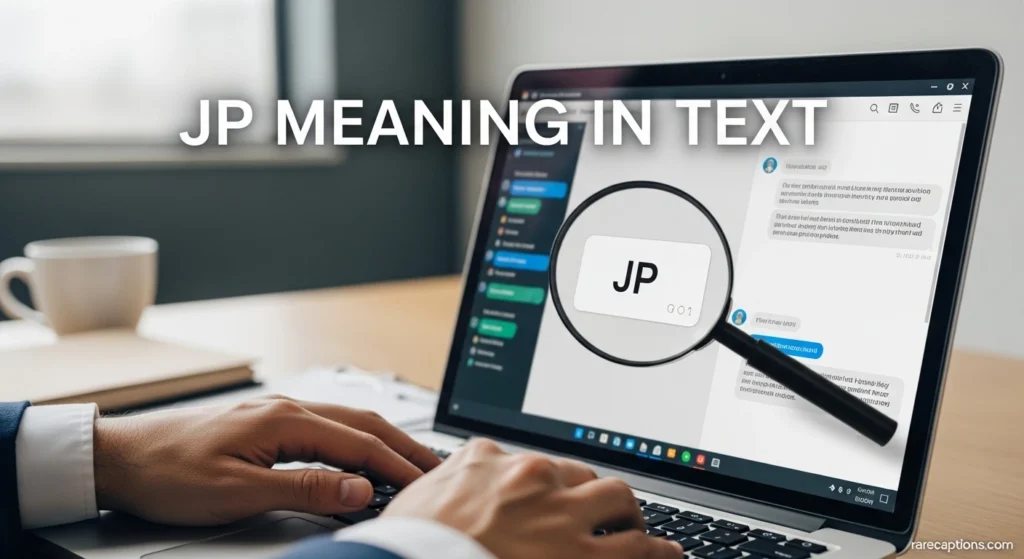
In texting and online communication, “JP” is most commonly used as an abbreviation for “Just Playing” or “Just Joking.” It is used to clarify that a previous statement was not meant to be taken seriously.
People use “JP” to soften messages that might otherwise sound rude, sarcastic, or overly blunt. For example, if someone says something like “You’re so bad at this game 😂 JP,” they are signaling that the comment was meant in fun, not criticism.
However, “JP” is not a universal abbreviation. Unlike more standardized slang like “LOL” or “BRB,” its meaning is more contextual. Some people may not recognize it at all, especially outside younger texting communities or certain online groups.
Why It Exists in Digital Communication
“JP” helps maintain tone clarity in short messages where facial expressions or vocal tone are missing. It acts as a quick emotional “buffer,” ensuring that humor is not misinterpreted as seriousness.
In essence, JP = tone correction tool in digital conversations.
JP as “Just Playing” in Casual Conversations
One of the most common uses of “JP” is “Just Playing.” This version is typically used among friends in informal chats where teasing is common.
For example:
- “You’re the worst driver ever 😂 JP”
- “I’m definitely better than you at this game… JP”
In these cases, “JP” works like a safety net. It prevents the message from being taken too seriously. It shows that the speaker is joking, not insulting.
Social Function of “Just Playing”
This usage helps maintain friendship harmony. In fast-paced digital interactions, people often use humor that might sound harsh if left unexplained. “JP” allows them to keep the humor without risking misunderstandings.
It is especially common in gaming chats, group messages, and social media comment sections where playful teasing is part of the culture.
JP as “Just Joking” and Its Emotional Softening Role
Another widely accepted meaning of “JP” is “Just Joking.” While similar to “Just Playing,” it often carries a slightly more emotional or corrective tone.
For instance:
- “You’re really slow at replying… JP 😅”
- “I think I won that argument… JP”
Here, “JP” is used to immediately neutralize any possible offense.
Emotional Function
“Just Joking” is not just about humor—it’s about emotional balance. It helps the speaker quickly repair any unintended emotional impact of their words. In a way, it acts like a digital smile or laugh, signaling friendliness and non-serious intent.
In relationships and friendships, this small abbreviation can prevent unnecessary misunderstandings and maintain a lighthearted tone.
JP in Different Social and Online Contexts
The meaning of “JP” can shift depending on where it is used. In private chats, it often means “Just Playing” or “Just Joking.” However, in other spaces, interpretations may vary.
In Social Media
On platforms like Instagram, Snapchat, or TikTok comments, “JP” is mostly used for humor or sarcasm. It helps users make playful remarks without sounding offensive.
In Friend Groups
Among close friends, “JP” becomes more flexible. It may be used frequently in teasing conversations where everyone understands the tone.
In Professional or Mixed Groups
In more formal or semi-formal group chats, “JP” is rarely used because it may be confusing or misunderstood, In such settings, people prefer clearer expressions like “just kidding.”
Common Misunderstandings of JP
One of the biggest issues with “JP” is that not everyone interprets it the same way.
JP vs Japan Confusion
Many people assume “JP” refers to Japan, especially in international contexts. For example, “JP server” in gaming often refers to a Japanese server, not a joke or playful statement.
Misreading Tone
If someone doesn’t understand “JP,” they might think the message is serious or even offensive. This can lead to unnecessary confusion in conversations.
Generational Gap
Younger users are more familiar with abbreviations like “JP,” while older users may not recognize it at all. This creates communication gaps in mixed-age conversations.
JP in Gaming and Online Communities
“JP” is particularly popular in gaming culture, where quick communication is essential.
Gamers often use it in chat to avoid misunderstandings during competitive or playful interactions.
Example:
- “You got destroyed 😂 JP”
- “That was a lucky shot, JP”
Why Gamers Use It
Gaming environments are highly competitive, and emotions can run high. “JP” helps reduce tension by signaling that comments are not meant to insult or provoke.
It supports a friendly competitive spirit while maintaining respect among players.
The Emotional Tone Behind JP
Although “JP” is short, it carries strong emotional value in communication. It acts as a tone indicator.
Key Emotional Roles:
- Softens sarcasm
- Prevents misunderstandings
- Maintains friendship harmony
- Adds humor without harm
In digital conversations where tone is easily lost, “JP” acts like a bridge between intention and interpretation.
For example, a message like “You’re terrible at this” could feel rude. But “You’re terrible at this JP 😄” completely changes its meaning to playful teasing.
How Context Changes the Meaning of JP
Context is everything when it comes to interpreting “JP.”
Friendly Chat
- “You’re so slow 😂 JP” → Means playful teasing
Gaming Chat
- “Nice try, JP” → Means light sarcasm
Misinterpreted Context
- “JP server is down” → Refers to Japan, not joking
Without context, “JP” can easily be misunderstood. That’s why understanding conversation background is essential.
Real-Life Chat Examples Using JP
Here are some realistic examples of how “JP” appears in conversations:
Example 1: Friends Chatting
A: “You always lose in games 😂” B: “I let you win… JP”
Example 2: Social Media Comment
“Your outfit is wild 😆 JP looks good though”
Example 3: Gaming Scenario
“Bro, that was the worst move ever JP 😂”
These examples show how “JP” adds humor while preventing emotional harm.
When Not to Use JP in Conversations
Although “JP” is useful, it is not always appropriate.
Avoid Using JP When:
- Talking in professional environments
- Communicating with people unfamiliar with slang
- Discussing sensitive topics
- Writing formal messages
Using “JP” in the wrong context can create confusion or seem unprofessional. In such cases, clearer phrases like “just kidding” are better.
Evolution of Texting Language and the Role of JP
Digital language is constantly evolving. Abbreviations like “LOL,” “BRB,” and “OMG” have become standard over time. “JP” belongs to a newer wave of informal shorthand used mainly in niche or social circles.
Why These Abbreviations Exist
People use shortcuts like “JP” because:
- Faster communication
- Informal tone
- Emotional clarity
- Social bonding
As communication continues to move toward speed and simplicity, abbreviations like “JP” reflect how language adapts to digital lifestyles.
Over time, some slang becomes mainstream, while others remain limited to specific communities. “JP” currently sits in the middle—understood by many but not universally recognized.
Conclusion
“JP” may look like a small and simple abbreviation, but it carries meaningful weight in digital communication. Most commonly used as “Just Playing” or “Just Joking,” it helps people express humor, soften statements, and prevent misunderstandings in fast-paced conversations. Its meaning, however, is not fixed—it depends heavily on context, relationship, and platform.
In everyday chats, “JP” acts as a tone adjuster, ensuring that playful comments are not taken too seriously. At the same time, confusion can arise when it is mistaken for other meanings like “Japan,” showing the importance of context awareness.
Ultimately, understanding “JP” is about more than knowing an abbreviation—it’s about understanding how modern communication blends speed, emotion, and intent into a few short characters.
FAQs
What does JP mean in texting?
“JP” usually stands for “Just Playing” or “Just Joking,” used to show that a message is not serious.
Is JP the same as JK?
They are similar. “JK” means “Just Kidding,” while “JP” often means “Just Playing.”
Can JP mean Japan?
Yes, in some contexts like gaming or travel, “JP” refers to Japan.
Is JP formal or informal?
It is strictly informal and used in casual conversations only.
Why do people use JP in chats?
To clarify humor, avoid misunderstandings, and soften statements.
Is JP commonly used worldwide?
No, it is more common in specific online and gaming communities.
Can JP be misunderstood?
Yes, without context it can be confusing or interpreted incorrectly.