The phrase evil eye meaning refers to a belief that a person’s jealous, envious, or malicious look can bring bad luck, misfortune, or negative energy to someone else.
The concept exists in many cultures around the world, including regions of the Middle East, South Asia, the Mediterranean, Latin America, and Eastern Europe. People often believe that excessive admiration, envy, or jealousy can unintentionally or intentionally cause harm.
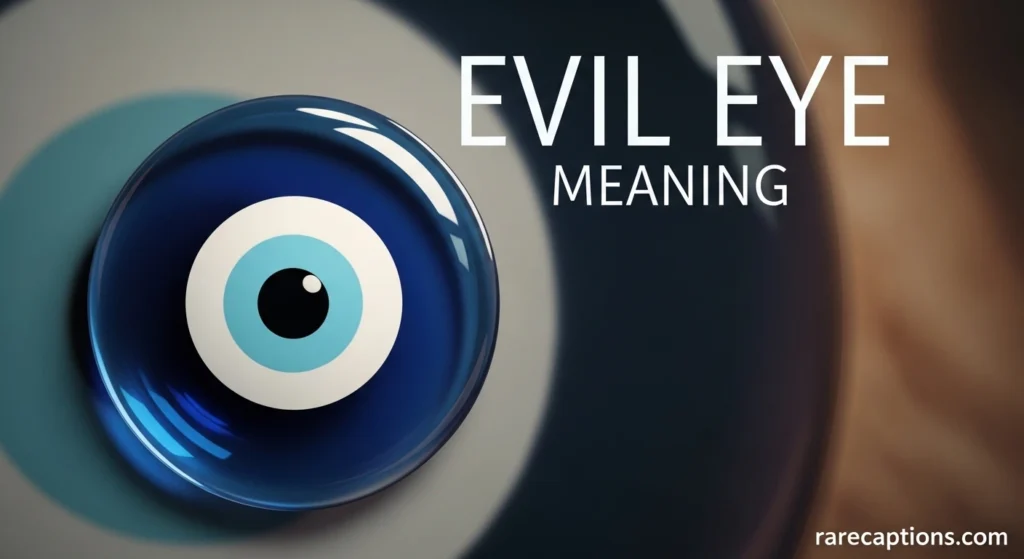
To protect themselves, many individuals wear an evil eye symbol, usually a blue eye-shaped charm believed to ward off negative energy.
In simple terms:
- The evil eye is a curse or negative energy transmitted through envy.
- It is often associated with bad luck or misfortune.
- Many cultures use protective symbols against it.
- The belief has existed for thousands of years.
The Origin and Cultural Significance
The evil eye is not a modern internet trend. It is one of the oldest beliefs in human history.
Ancient civilizations believed that certain people could cause harm simply through a jealous glance. Over time, different cultures developed protective practices, including:
- Wearing eye-shaped amulets
- Hanging charms in homes
- Reciting prayers
- Performing cleansing rituals
- Using protective jewelry
Today, the evil eye symbol is commonly found on:
- Necklaces
- Bracelets
- Rings
- Home decorations
- Car ornaments
- Fashion accessories
For many people, the symbol represents protection, positivity, and spiritual well-being.
Different Meanings Across Online Platforms
Although the traditional meaning remains the same, social media users sometimes use the term in different ways depending on the platform.
On Instagram, people often mention the evil eye when posting:
- Success stories
- Travel photos
- Luxury purchases
- Engagement announcements
- Family milestones
Examples:
- “Don’t give me the evil eye.”
- “Protecting my peace from the evil eye.”
- “Wearing my evil eye bracelet everywhere.”
In these cases, users are usually referring to jealousy or negative energy from others.
TikTok
TikTok has popularized spiritual and manifestation-related content.
Users frequently discuss:
- Energy protection
- Manifestation
- Spiritual beliefs
- Good luck charms
- Negative vibes
A creator might say:
- “Ever since I got the evil eye bracelet, I feel more protected.”
The phrase often appears in wellness and spirituality content.
Snapchat
On Snapchat, the term is generally used casually among friends.
Examples:
- “Stop giving me the evil eye!”
- “Everyone was staring at me with the evil eye.”
The meaning can be serious or playful depending on context.
In WhatsApp chats, especially among family groups, the phrase often keeps its traditional meaning.
Examples:
- “Mashallah, protect the baby from the evil eye.”
- “Wear your charm to avoid the evil eye.”
These messages usually reflect cultural or religious traditions.
Facebook users commonly discuss the evil eye in:
- Parenting groups
- Spiritual communities
- Cultural discussions
- Family conversations
The meaning typically remains connected to protection from envy and bad luck.
Is Evil Eye a Slang Term or Internet Abbreviation?
No. The evil eye is not a texting slang term, internet abbreviation, social media acronym, or chat meaning like LOL, BRB, IMO, or FYP.
However, people often search for it alongside:
- Texting slang
- Internet abbreviation guides
- Snapchat slang
- TikTok meaning searches
- Online messaging expressions
- Gen Z slang terms
- WhatsApp meaning explanations
- Instagram chat terms
- Casual texting phrases
This happens because users encounter the phrase online and assume it may be another internet acronym or social media expression.
Unlike most online slang, the evil eye has historical, cultural, and spiritual roots rather than originating from digital communication.
Examples of Evil Eye in Chats and Conversations
Seeing examples makes the meaning easier to understand.
Example 1: Friend Conversation
Person A: I finally got the promotion!
Person B: That’s amazing. Watch out for the evil eye though.
Meaning: Be careful of jealousy from others.
Example 2: Family Chat
Mom: The baby looks adorable.
Grandmother: Mashallah. Protect her from the evil eye.
Meaning: A wish for protection from envy or bad luck.
Example 3: Social Media Comment
Post: Just bought my dream car!
Comment: Beautiful! Evil eye off this car.
Meaning: Hoping the owner’s success isn’t affected by jealousy.
Example 4: TikTok Caption
“Bought an evil eye bracelet for protection.”
Meaning: Using a symbolic charm believed to ward off negative energy.
Example 5: Casual Joke
Friend: You beat me at every game today.
Friend 2: That’s because you’re giving me the evil eye.
Meaning: Used humorously rather than literally.
When to Use the Term
You can use the phrase appropriately in several situations.
Cultural Discussions
When discussing traditions, beliefs, and customs.
Example:
- “Many cultures believe in the evil eye.”
Spiritual Conversations
When talking about protection, energy, or symbolism.
Example:
- “She wears an evil eye necklace.”
Social Media Posts
When referring to jealousy or protecting personal achievements.
Example:
- “Keeping the evil eye away from my blessings.”
Educational Content
When explaining cultural history or folklore.
Example:
- “The evil eye belief dates back thousands of years.”
Casual Humor
Among friends who understand the reference.
Example:
- “Stop giving me the evil eye when I win.”
When Not to Use the Term
There are situations where using the phrase may create confusion.
Professional Communication
Avoid using it in formal business settings unless discussing cultural topics.
Not recommended:
- “Our sales dropped because of the evil eye.”
With Unfamiliar Audiences
Some people may not understand the cultural context.
Consider explaining the term when necessary.
As a Scientific Explanation
The evil eye is a cultural and spiritual belief rather than a scientifically proven phenomenon.
To Judge Others
Avoid accusing people of causing harm through jealousy without evidence.
Using the term respectfully helps prevent misunderstandings.
Common Symbols Associated With the Evil Eye
Several symbols are connected with protection from the evil eye.
Blue Eye Amulet
The most recognized symbol.
Features:
- Blue color
- White circle
- Dark center resembling an eye
Evil Eye Bracelet
Popular jewelry item worn for protection.
Evil Eye Necklace
Often worn as a daily accessory.
Home Decorations
People place charms in homes to symbolize protection.
Car Charms
Some drivers display evil eye ornaments in vehicles.
The symbol’s popularity has grown worldwide through fashion and social media.
Alternatives and Related Expressions
Depending on the conversation, people may use similar phrases.
Negative Energy
Example:
- “I’m avoiding negative energy.”
Bad Vibes
Example:
- “That situation gave me bad vibes.”
Jealousy
Example:
- “People can be jealous of success.”
Envy
Example:
- “Envy sometimes affects relationships.”
Spiritual Protection
Example:
- “I wear symbols of spiritual protection.”
These alternatives often communicate similar ideas without specifically referencing the evil eye tradition.
Common Misunderstandings
Many people misunderstand the phrase when they first encounter it.
Myth 1: It’s a Texting Acronym
False.
The evil eye is not an acronym or internet abbreviation.
Myth 2: Only One Culture Believes in It
False.
The belief exists across many countries and cultures.
Myth 3: It Is Always Religious
Not necessarily.
Some people view it as a cultural tradition rather than a religious belief.
Myth 4: Everyone Takes It Literally
False.
Many people use the phrase casually or humorously.
Myth 5: The Symbol Is Only Decorative
Not always.
While some wear it as fashion, others see it as meaningful spiritual protection.
Frequently Asked Questions
What does the evil eye symbolize?
It commonly symbolizes protection from jealousy, envy, and negative energy.
Is the evil eye good or bad?
The evil eye itself is considered negative, while the protective symbol is viewed as beneficial and protective.
Why is the evil eye blue?
Blue has traditionally been associated with protection in many cultures, though interpretations vary.
Is the evil eye a religion?
No. It is a cultural and spiritual belief found across multiple religions and societies.
What does wearing an evil eye bracelet mean?
Many people wear it as a symbol of protection from negative energy and bad luck.
Is the evil eye popular on social media?
Yes. It frequently appears on Instagram, TikTok, Snapchat, Facebook, and other platforms, especially in fashion, spirituality, and lifestyle content.
Can the phrase be used jokingly?
Yes. Friends often use it playfully to describe jealousy or competitive situations.
Is the evil eye related to Gen Z slang?
Not directly. Although younger users discuss it online, it is not considered Gen Z slang, texting slang, or an internet abbreviation.
Conclusion
The evil eye is a centuries-old belief centered around the idea that envy or jealousy can bring negative energy or misfortune. While modern social media platforms have helped popularize the symbol and its associated traditions, it is not a texting acronym, internet abbreviation, or chat slang. Instead, it remains a cultural and spiritual concept recognized across many societies worldwide.
Whether you encounter it on TikTok, Instagram, Snapchat, WhatsApp, or in everyday conversation, understanding its meaning helps you interpret posts, comments, and discussions more accurately. From protective jewelry and home decorations to casual online references, the evil eye continues to be one of the most widely recognized symbols of protection and good fortune in the modern world.