You’re scrolling through your phone late at night, half-distracted, hopping between chats, memes, and short messages that seem to have their own secret language. Then suddenly you see it: “yfm?” It looks simple, almost too simple, but your brain pauses for a second. What does it actually mean? Is it a question, a feeling, or just another piece of internet slang that everyone except you seems to understand?
In today’s fast-moving digital world, abbreviations like “yfm” are more than just shortcuts—they’re emotional signals, cultural markers, and context-driven expressions that shape how we communicate online. “YFM” stands for “You Feel Me,” a phrase used to check understanding, seek agreement, or connect emotionally with someone. But its meaning goes deeper than translation.
This article explores “yfm meaning in text” in detail—how it’s used, why it matters, what emotions it carries, and how it fits into modern online communication. By the end, you’ll not only understand the term but also recognize the subtle ways it shapes digital conversations in everyday life.
1. What Does YFM Mean in Text?
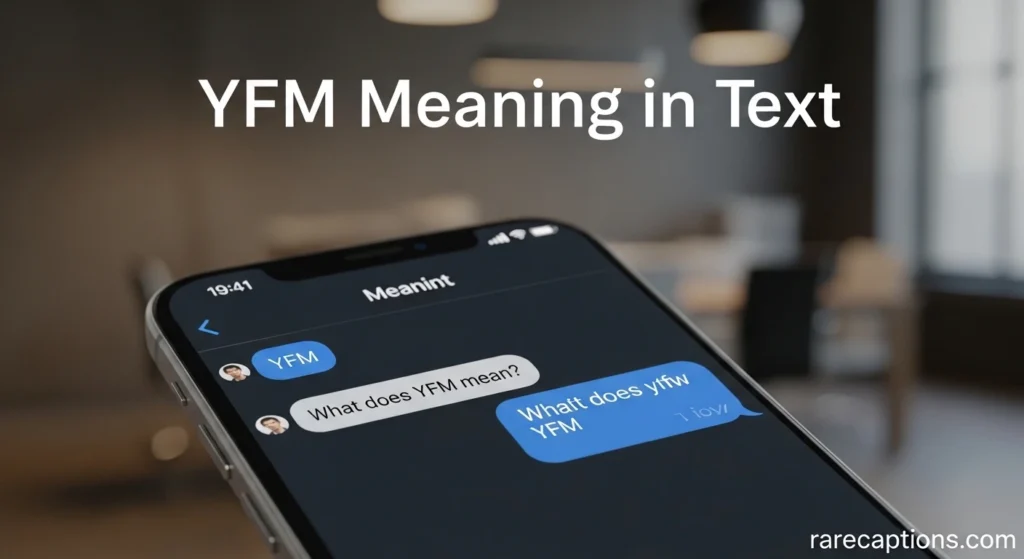
At its simplest, YFM means “You Feel Me.” It is used in texting and online conversations to ask if the other person understands or relates to what is being said. However, it’s not just about comprehension—it often carries an emotional tone.
When someone says “yfm,” they’re not just checking if you “get it.” They’re asking if you feel it. That emotional layer makes it more personal than a simple “do you understand?”
For example:
- “This situation is exhausting, yfm?”
- “That movie was deep, yfm?”
In both cases, the speaker is inviting connection, not just confirmation. It’s a way of saying, “We’re on the same page emotionally.”
In modern texting culture, YFM has become a shorthand for shared experience, especially among younger users who prefer quick, expressive communication over long explanations. It reflects how digital language is evolving—less formal, more emotional, and deeply contextual.
2. The Origin and Evolution of YFM
The phrase “you feel me” existed in spoken English long before texting became popular. It emerged in informal speech, especially in urban communities, hip-hop culture, and everyday conversational English. Over time, as texting and social media grew, it naturally transformed into the abbreviation “yfm.”
Its evolution shows how language adapts to technology. Instead of typing full phrases, users began shortening expressions for speed and convenience. But YFM didn’t lose its meaning in the process—it actually gained new layers of expression.
In early internet chat rooms and SMS culture, YFM became a way to build quick emotional alignment. Later, it spread across platforms like Instagram, Snapchat, and TikTok, where short, expressive language dominates.
Today, YFM is not just slang—it’s part of digital emotional vocabulary. It represents how people blend spoken language with online communication, making conversations feel more personal even through screens.
3. Contexts Where YFM Is Commonly Used
YFM appears in a wide variety of casual conversations. It is most commonly used when someone wants to confirm emotional understanding or shared experience.
Casual Conversations
Friends often use YFM when talking about daily struggles or relatable situations:
- “Work is draining me today, yfm?”
Emotional Expression
It can also appear in deeper conversations:
- “Sometimes you just feel invisible, yfm?”
Humor and Sarcasm
YFM is sometimes used jokingly:
- “I woke up late again… yfm?”
In all these cases, the phrase helps the speaker invite agreement or empathy. It is less about getting an answer and more about building connection.
The flexibility of YFM is what makes it popular—it fits both light and serious conversations depending on tone and context.
4. Emotional Meaning Behind YFM
YFM is not just a linguistic shortcut; it is emotionally loaded. It often expresses vulnerability, frustration, excitement, or shared understanding.
When someone uses YFM, they are essentially opening a small emotional window and asking the other person to step into their perspective. It is a form of digital empathy.
For example:
- “This week has been overwhelming, yfm?” expresses exhaustion and a need for support.
- “That ending hit hard, yfm?” expresses emotional impact and shared reaction.
Why It Feels Personal
Unlike formal language, YFM feels conversational and intimate. It mimics spoken language, making online chats feel closer to real-life interaction.
This emotional depth is why YFM is often used in close friendships or casual relationships where people already share a sense of understanding.
5. YFM Compared to Similar Slang Terms
YFM is often confused with other abbreviations that seem similar but carry different meanings.
- YKWIM (You Know What I Mean): Focuses more on explanation or clarification.
- WYM (What You Mean): Asks for clarification or repetition.
- SMH (Shaking My Head): Expresses disappointment or disbelief.
Key Difference
YFM is emotionally driven, while others are more informational or reactive. It’s less about asking for explanation and more about seeking emotional alignment.
This makes YFM unique in digital communication—it is not just about understanding words, but about sharing feelings behind those words.
6. Real-Life Chat Examples of YFM
To understand YFM better, let’s look at some real-world style conversations.
Example 1: Friendship Chat
A: “I feel like no one listens anymore, yfm?” B: “Yeah, I get you. It’s been like that lately.”
Example 2: School or Work Stress
A: “Assignments are piling up so fast, yfm?” B: “Tell me about it, I’m drowning too.”
Example 3: Emotional Moment
A: “Sometimes silence says everything, yfm?” B: “True, some things don’t need words.”
These examples show how YFM creates emotional bonding. It invites others to respond with empathy rather than just information.
7. YFM on Social Media Platforms
On platforms like Instagram, Snapchat, and TikTok, YFM is widely used in captions, comments, and short videos. Its brevity makes it perfect for fast-paced digital environments.
Instagram Captions
People use it to add emotional depth:
- “Late nights and deep thoughts, yfm?”
TikTok Trends
Creators often use YFM in relatable storytelling videos, where viewers are expected to “feel” the situation being shown.
Snapchat Chats
In private conversations, it works as a quick emotional check-in between friends.
Social media has amplified YFM’s popularity because it thrives in environments where emotion and speed matter equally.
8. Common Misunderstandings About YFM
Not everyone interprets YFM correctly, especially those unfamiliar with internet slang.
Misinterpretation 1: Thinking It Is Formal Language
Some assume it is a professional acronym, but it is purely informal.
Misinterpretation 2: Literal Meaning Confusion
New users might think it means asking about physical feelings rather than emotional understanding.
Misinterpretation 3: Tone Misreading
Depending on context, YFM can sound either serious or casual, which sometimes confuses readers.
Understanding context is key. Without tone, YFM can easily be misunderstood.
9. How Tone Changes the Meaning of YFM
Tone plays a major role in how YFM is interpreted.
Serious Tone
- “Life feels overwhelming, yfm?” This expresses deep emotional struggle.
Casual Tone
- “That movie was crazy, yfm?” This is light and conversational.
Humorous Tone
- “I just ate 3 pizzas alone, yfm?” This is playful and relatable.
Even though the words remain the same, the emotional meaning shifts completely based on context. This makes YFM a flexible communication tool.
10. When and How to Use YFM Properly
Using YFM effectively depends on understanding your audience and situation.
Best Situations
- Casual conversations with friends
- Emotional storytelling
- Relatable humor or shared experiences
When to Avoid It
- Professional emails
- Formal communication
- Academic writing
Using YFM in the wrong setting can make communication feel unprofessional or unclear. It works best in relaxed, personal environments where emotional connection is valued.
11. Cultural and Generational Use of YFM
YFM is especially popular among younger generations who grew up with texting and social media. It reflects how Gen Z and millennials communicate in shorter, more expressive formats.
In contrast, older generations may prefer full phrases like “do you understand what I mean?” rather than abbreviations.
This generational difference highlights how language evolves with technology. YFM is part of a broader trend where emotional expression is compressed into short digital forms.
It also shows how internet culture influences everyday speech, blending online slang with real-world conversations.
12. The Communication Lesson Behind YFM
Beyond slang, YFM teaches an important lesson about communication: people don’t just want information—they want connection.
When someone says “yfm,” they are not only asking for agreement but also seeking emotional validation. This reflects a deeper human need to be understood.
In a world filled with fast messages and short attention spans, YFM reminds us that meaning is not just in words, but in shared feelings.
Understanding this can improve how we communicate—not just online, but in real life too. It encourages empathy, listening, and emotional awareness in everyday conversations.
Conclusion
YFM, meaning “You Feel Me,” is more than just a piece of internet slang. It is a reflection of how digital communication has evolved to include emotion, connection, and shared understanding in just a few letters. From casual chats to social media captions, it helps people express feelings quickly while still building meaningful connections.
At its core, YFM is about empathy—asking someone not just to understand your words, but to feel your experience. In a fast-paced digital world, this small phrase carries surprisingly deep emotional weight. Learning how and when to use it helps you better understand modern communication and the subtle ways people connect online today.
FAQs
What does YFM mean in texting?
YFM stands for “You Feel Me,” used to ask if someone understands or relates emotionally.
Is YFM formal or informal?
It is strictly informal and used in casual conversations only.
Can YFM be used in professional communication?
No, it is not appropriate for formal or professional settings.
Is YFM only used in English-speaking countries?
It is mainly used in English internet slang but understood globally through social media.
Does YFM always mean agreement?
Not always—it can also express emotional connection or shared feeling.
What is the difference between YFM and YKWIM?
YFM focuses on emotional understanding, while YKWIM focuses on clarification of meaning.
Why do people use YFM instead of full sentences?
People use it for speed, emotional tone, and convenience in digital communication.