Introduction
You’re halfway through a late-night chat when the conversation starts winding down. One person says, “Alright, cya.” It feels casual, almost automatic—but what does it really mean? Is it just a lazy way of saying goodbye, or does it carry something more subtle about tone, relationship, or digital communication habits?
In today’s fast-moving online world, abbreviations like “cya” have become second nature. They appear in texts, social media replies, gaming chats, and even workplace messages. Yet, despite how common it is, many people still wonder about its exact meaning, emotional tone, and appropriate usage. Misinterpreting such small expressions can sometimes lead to confusion about intent—whether someone is being friendly, distant, or simply brief.
This article breaks down “cya meaning in text” in a deep and practical way. We’ll explore its definition, origins, emotional nuance, real-life examples, and how it fits into modern communication. By the end, you’ll not only understand what “cya” means but also how to use and interpret it confidently in different situations.
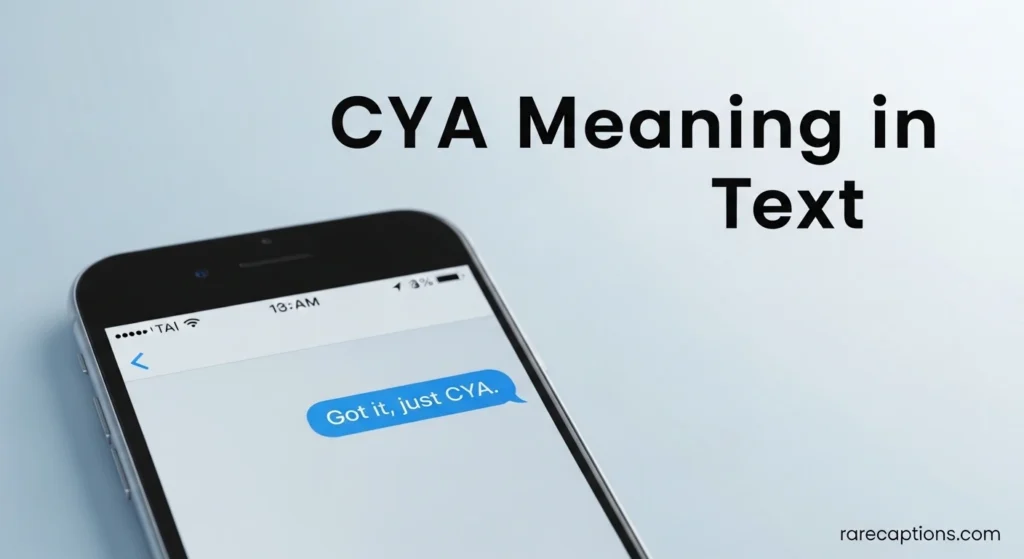
What Does “CYA” Mean in Text?
At its core, “cya” is a shorthand version of the phrase “see you.” It is commonly used as an informal way to say goodbye in digital communication. Instead of typing “see you later,” people shorten it to “cya” to save time and maintain a casual tone.
This abbreviation is widely used across texting apps, social media platforms, and online chats. It is especially common among younger users and in fast-paced conversations where brevity matters more than formality.
Simple Meaning Breakdown
- Cya = See you
- Often implies: “Talk to you later” or “Goodbye for now”
- Used in informal conversations only
While it may look like just a quick goodbye, its usage reflects how modern communication values speed and efficiency. In many cases, “cya” also implies familiarity between the people communicating, as it is rarely used in formal settings like emails or professional discussions.
Understanding this basic meaning is essential before diving into its deeper emotional and contextual layers.
The Origin and Evolution of “CYA”
The abbreviation “cya” didn’t appear randomly—it evolved from the natural shortening of spoken English into digital shorthand. As texting became popular in the late 1990s and early 2000s, users began compressing common phrases to save time on physical keyboards and early mobile phones.
“See you” naturally transformed into “c u,” and eventually into “cya,” which felt smoother and more readable in conversation flow.
Over time, “cya” became more than just typing efficiency—it turned into part of internet culture. Messaging platforms like MSN Messenger, early SMS texting, and later WhatsApp and Snapchat helped normalize this abbreviation.
Why It Stuck Around
- Easy to type
- Instantly recognizable
- Feels friendly and casual
- Fits fast-paced digital conversations
Even today, despite predictive keyboards and voice typing, “cya” remains widely used because it carries a familiar, laid-back tone that full phrases sometimes lack.
Common Situations Where “CYA” Is Used
“Cya” appears in a variety of everyday digital interactions. Its usage is flexible, but always informal.
1. Ending Casual Conversations
Friends often use “cya” when finishing a chat:
“Got to go now, cya!”
2. Leaving Online Groups or Gaming Sessions
In gaming communities, it’s a quick sign-off:
“Good match everyone, cya next round.”
3. Social Media Replies
It may appear in comment threads when conversations wrap up.
4. Quick Work Chats (Informal Teams)
In relaxed workplaces or group chats, colleagues sometimes use it casually:
“Heading out, cya tomorrow.”
The key idea is that “cya” signals departure without making the moment feel heavy or formal. It keeps interactions light and natural.
Emotional Tone Behind “CYA”
Although “cya” looks simple, it carries subtle emotional cues depending on how it’s used.
Friendly and Warm Tone
Most of the time, “cya” expresses friendliness. It suggests that the conversation is ending on a positive note, with an expectation of future interaction.
Neutral or Brief Tone
Sometimes it can feel slightly abrupt, especially if used without additional words. For example:
“cya.”
This can feel more distant, not necessarily rude, but less emotionally engaged.
Context-Dependent Meaning
The emotional tone of “cya” depends heavily on:
- Relationship between speakers
- Previous conversation tone
- Presence of emojis or additional words
For instance:
“Cya 😊” feels warm and friendly “cya.” feels neutral or slightly distant
Understanding this helps avoid misinterpretation in digital communication.
“CYA” vs “See Ya” vs “See You”
Although these phrases mean the same thing, their usage differs slightly in tone and style.
“See You”
- Fully written
- Slightly more formal
- Used in both spoken and written communication
“See Ya”
- Casual spoken form
- Common in speech rather than text
“Cya”
- Fully digital shorthand
- Fastest and most informal version
In essence, all three carry the same meaning, but “cya” is the most efficient and internet-friendly version. It reflects how language adapts to digital environments where speed often matters more than structure.
How “CYA” Fits Into Digital Communication Culture
The rise of abbreviations like “cya” reflects a larger shift in how humans communicate online. Digital platforms prioritize speed, simplicity, and emotional shorthand.
Why Short Forms Matter
- Reduce typing effort
- Speed up conversations
- Match fast-response culture
- Build informal connection styles
In messaging apps, conversations often happen in real time. People don’t want to type long phrases when short expressions convey the same meaning. “Cya” fits perfectly into this environment.
It also reflects a cultural preference for relaxed communication. Instead of rigid grammar or formal tone, digital conversations lean toward efficiency and personality.
Professional vs Informal Use of “CYA”
One of the most important aspects of understanding “cya” is knowing where it should and should not be used.
Informal Settings (Appropriate)
- Friends and family chats
- Gaming conversations
- Social media interactions
- Casual group chats
Professional Settings (Usually Inappropriate)
- Formal emails
- Client communication
- Job interviews
- Official workplace documents
In professional environments, “cya” can appear unprofessional or overly casual. Instead, phrases like “see you later” or “talk soon” are preferred.
However, in relaxed workplace cultures, especially in internal chats, it may still be acceptable depending on team norms.
Misunderstandings and Misinterpretations of “CYA”
Despite its simplicity, “cya” can sometimes be misunderstood.
1. Mistaking It for Coldness
If someone receives “cya” without context, they might think the sender is being dismissive.
2. Overanalyzing Tone
People sometimes read too much into abbreviations, assuming emotional distance where none exists.
3. Cross-Cultural Confusion
Not everyone is familiar with internet slang, leading to confusion among non-native English speakers.
Example Scenario
A conversation ends with:
“cya”
One person might interpret it as friendly, while another may feel the chat ended abruptly.
The key is understanding that “cya” is generally neutral unless tone indicators suggest otherwise.
Cultural and Global Usage of “CYA”
“Cya” is widely recognized in English-speaking digital communities, but its usage varies globally.
English-Dominant Regions
Common in the US, UK, Canada, Australia, and online gaming communities.
Non-Native English Users
Often adopted through social media and gaming, even if not commonly used in spoken language.
Internet Culture Influence
Platforms like Discord, Reddit, and online multiplayer games have helped spread “cya” worldwide as part of global internet slang.
It is one of those expressions that transcends geography due to digital communication.
Variations and Related Slang Terms
“Cya” belongs to a broader family of shorthand expressions.
Common Variants
- cya later
- c u
- cu
- see ya
- ttyl (talk to you later)
- brb (be right back)
Each variation carries slightly different timing or tone implications. For example, “ttyl” suggests a return to conversation, while “cya” often signals a clean exit.
These variations show how flexible digital language has become.
Real-Life Examples of “CYA” in Conversation
Example 1: Friends Chat
A: “I’m heading home now.” B: “Alright, cya!”
Example 2: Gaming Session
Player 1: “Good game everyone!” Player 2: “cya next round!”
Example 3: Social Media Interaction
“Thanks for the info, cya!”
These examples show how naturally “cya” fits into everyday digital conversations without disrupting flow or tone.
Psychological and Social Meaning Behind “CYA”
Beyond language, “cya” reflects human behavior in digital spaces.
Efficiency in Communication
People prefer shorter messages to maintain fast-paced interactions.
Sense of Familiarity
Using abbreviations signals comfort and informality between individuals.
Digital Identity Expression
Slang like “cya” helps users express personality—casual, relaxed, and modern.
It also reflects how humans adapt language to match technological environments. Just as spoken language evolved over centuries, digital language is evolving rapidly in real time.
How to Respond to “CYA” Properly
Responding to “cya” is simple, but tone matters.
Common Replies
- “cya!”
- “see ya”
- “bye!”
- “talk later”
Adding Warmth
- “cya 😊”
- “take care, cya”
The best response depends on the relationship and conversation tone. Matching energy is usually the safest approach.
Conclusion
“Cya” may look like a small, casual abbreviation, but it plays a meaningful role in modern digital communication. It represents more than just “see you”—it reflects speed, familiarity, and the evolving nature of how people interact online. Whether used in friendly chats, gaming sessions, or quick social media exchanges, it helps conversations end smoothly without unnecessary formality.
Understanding its tone and context is key. While generally friendly and neutral, its emotional impact can shift depending on how and where it’s used. By recognizing these subtle differences, you can interpret messages more accurately and respond more confidently in everyday digital interactions. Ultimately, “cya” is a reminder of how language continues to adapt to our fast-moving online world.
FAQs
What does “cya” stand for in texting?
It stands for “see you” and is used as an informal goodbye in digital conversations.
Is “cya” rude?
No, it is generally not rude. However, it may feel abrupt depending on context.
Can I use “cya” in professional emails?
It is not recommended in formal or professional communication.
Is “cya” the same as “see ya”?
Yes, both mean the same thing, but “cya” is more text-based shorthand.
Where is “cya” commonly used?
It is used in texting, social media, gaming chats, and informal online communication.
Does “cya” mean “goodbye forever”?
No, it usually implies a temporary goodbye like “see you later.”
How should I respond to “cya”?
You can reply with “cya,” “bye,” or “talk later,” depending on tone.
Is “cya” still popular today?
Yes, it remains widely used in digital communication despite newer slang forms.