You are in the middle of a fast-moving conversation. Messages are flying back and forth, someone sends a funny meme, another person replies with laughing emojis, and suddenly one message appears: “brb.” For a moment, the conversation pauses. No dramatic goodbye, no detailed explanation — just three tiny letters that everyone somehow understands instantly.
That simple abbreviation has become one of the most recognizable pieces of internet language. Whether you are texting friends, gaming online, chatting at work, or scrolling through social media, “brb” appears everywhere. Yet behind those three letters is more than just a quick phrase. It reflects how people communicate in a world where conversations happen constantly and attention shifts rapidly between digital and real life.
Understanding the meaning of “brb” in text matters because online communication is full of subtle signals. The way someone uses “brb” can reveal politeness, urgency, casualness, or even emotional tone. In this article, we will explore what “brb” really means, how it evolved, when to use it, common misunderstandings, emotional nuances, and the role it plays in everyday conversations. By the end, you will understand not only the definition of “brb,” but also why this tiny abbreviation remains so important in modern digital culture.
What Does BRB Mean in Text?
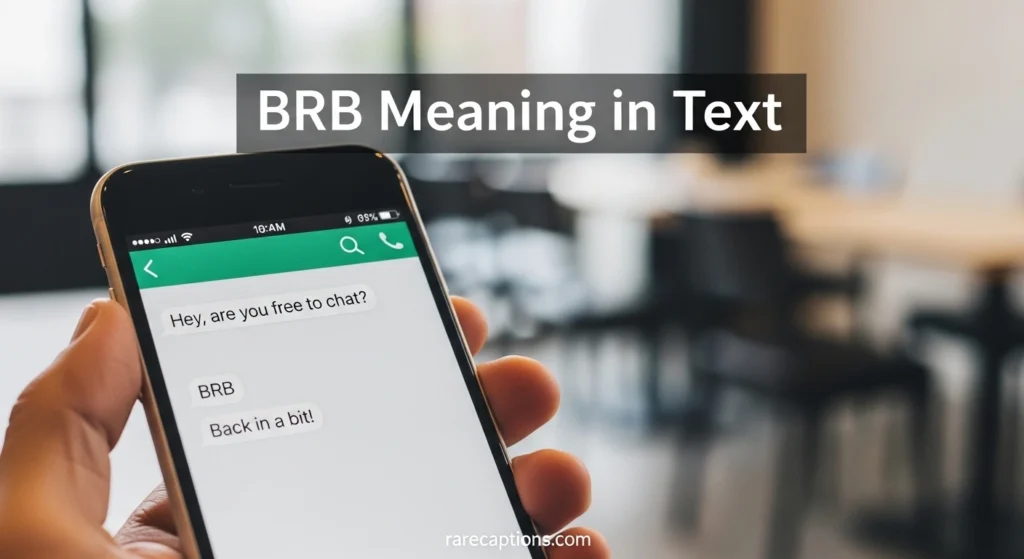
“BRB” stands for “Be Right Back.” It is commonly used in texting, online chats, gaming, and social media conversations to let others know that someone is stepping away temporarily but plans to return soon.
The phrase works like a quick social signal. Instead of disappearing without explanation, a person types “brb” to reassure others that the conversation is not over. It is the digital equivalent of saying, “Hold on for a second” during an in-person conversation.
For example:
- “Someone’s at the door, brb.”
- “Need to grab my charger, brb.”
- “brb dinner time.”
The phrase is short because online communication often values speed and convenience. In fast-moving conversations, people do not want to type long explanations every time they step away.
Interestingly, “brb” carries a sense of temporary absence. Unlike saying “bye,” it suggests continuity. The speaker intends to return, even if they do not specify exactly when.
Over time, “brb” has become so familiar that many people instantly understand it without thinking about the actual words behind it. Even people who rarely text often recognize the abbreviation because it has been part of internet culture for decades.
Despite being simple, “brb” plays an important role in digital etiquette. It keeps conversations smoother, prevents confusion, and helps maintain connection even during brief interruptions.
The Origins of BRB and Early Internet Culture
Long before smartphones dominated daily life, people communicated through online chat rooms, instant messengers, and gaming platforms. During those early internet years, typing speed mattered. Slow keyboards, dial-up connections, and rapid group chats encouraged users to shorten phrases whenever possible.
That environment gave birth to abbreviations like:
- LOL — Laugh Out Loud
- AFK — Away From Keyboard
- BTW — By The Way
- BRB — Be Right Back
“BRB” became especially popular in online chatrooms during the late 1990s and early 2000s. Back then, conversations often happened in real time. If someone suddenly disappeared without explanation, others might wonder whether the connection failed or whether the person intentionally left.
Typing “brb” solved that problem instantly.
Why Shortcuts Became So Popular
Digital communication in the early internet era had limitations. Many people typed slowly, internet speeds were weak, and messaging systems were basic. Abbreviations saved both time and effort.
A phrase like “I need to step away for a minute but I’ll return shortly” became simply “brb.”
The Emotional Function of BRB
Even in those early years, “brb” served more than a practical purpose. It showed social awareness. Instead of vanishing mid-conversation, users acknowledged the presence of others.
That small courtesy helped build trust and friendliness in online communities.
Today, although technology has changed dramatically, the abbreviation survived because its purpose remains useful. Human conversations still involve interruptions, distractions, and temporary pauses.
Why BRB Became So Common in Everyday Texting
One reason “brb” became so universal is that modern life is constantly interrupted. People text while commuting, cooking, studying, working, gaming, and multitasking through dozens of activities.
Conversations rarely happen in a perfectly uninterrupted way anymore.
Imagine someone texting while making coffee. The kettle whistles. A family member calls their name. A delivery arrives at the door. Instead of fully ending the conversation, they send “brb” because it communicates something very specific: “I still care about this conversation, but real life needs my attention for a moment.”
That balance between digital interaction and physical responsibilities is exactly why “brb” remains relevant.
BRB Fits the Speed of Modern Communication
Texting culture rewards efficiency. People want messages to feel quick, natural, and conversational. “BRB” works because it is instantly recognizable and emotionally lightweight.
It does not sound formal. It does not create drama. It simply keeps communication flowing smoothly.
It Reduces Social Awkwardness
Without “brb,” disappearing from a chat can sometimes feel rude. Even brief silence may create uncertainty, especially in active conversations.
A simple “brb” prevents misunderstandings by signaling temporary absence rather than disinterest.
That tiny phrase can make online communication feel more human and considerate.
Different Ways People Use BRB in Conversations
Not every “brb” means the exact same thing. The context often changes the tone and interpretation.
Sometimes it literally means someone will return in one minute. Other times, it becomes a vague promise that could last much longer.
Casual Everyday Usage
In ordinary conversations, “brb” usually indicates a quick interruption.
Examples include:
- Getting food
- Answering a phone call
- Helping someone nearby
- Taking care of a small task
In these situations, the phrase feels light and practical.
Gaming and Live Chats
In online gaming, “brb” has a stronger sense of urgency because teammates may depend on each other.
For example:
- “brb bathroom”
- “brb lagging”
- “brb food delivery”
Here, the abbreviation helps manage expectations during real-time interaction.
Social Media and Group Chats
Sometimes people use “brb” humorously or dramatically:
- “brb crying after watching that movie”
- “brb deleting my entire existence after this embarrassment”
In these cases, the phrase becomes playful rather than literal.
The flexibility of “brb” is one reason it has remained popular for so long.
The Emotional Meaning Behind BRB
At first glance, “brb” looks purely functional. But emotionally, it often carries subtle messages about connection and social respect.
When someone says “brb,” they are usually communicating:
- I intend to return
- I value this interaction
- I do not want you to think I disappeared intentionally
That may sound small, but in digital communication, reassurance matters.
BRB as a Sign of Courtesy
Imagine two scenarios.
In the first, someone suddenly stops replying without explanation.
In the second, they say: “brb, need to help my mom.”
The second interaction feels warmer and more respectful because it acknowledges the other person.
The Human Need for Continuity
People naturally seek closure and clarity in conversations. “BRB” provides temporary continuity instead of abrupt silence.
Even though it is only three letters, it reduces uncertainty and keeps social interaction comfortable.
That emotional role explains why “brb” survived while many older internet abbreviations faded away.
Common Misunderstandings About BRB
Despite being simple, “brb” sometimes creates confusion because different people interpret time differently.
For one person, “brb” means returning in 30 seconds. For another, it could mean disappearing for an hour.
This mismatch can occasionally cause frustration.
When “BRB” Lasts Too Long
Most people have experienced this situation: Someone says “brb” and never returns.
At first it feels amusing, but repeated behavior may seem unreliable or dismissive.
That is because “brb” creates an expectation of return. When the return never happens, the conversation feels unfinished.
Tone Can Be Misread
Sometimes “brb” may appear cold if used without context.
For example:
- “brb.”
versus
- “brb, my food’s here lol”
The second message feels friendlier because it includes personality and explanation.
Digital communication lacks facial expressions and vocal tone, so even small wording choices matter.
Not Everyone Understands Internet Slang
Older generations or people unfamiliar with texting abbreviations may not immediately recognize “brb.”
In professional or formal settings, spelling out the full phrase may sometimes be clearer.
BRB in Online Gaming Culture
Gaming communities helped make “brb” even more widespread. Multiplayer games often require constant teamwork, communication, and coordination, making quick status updates essential.
In competitive games, disappearing unexpectedly can hurt the entire team. Saying “brb” quickly informs others that a player is temporarily unavailable.
Real-Time Communication Matters
Unlike casual texting, gaming conversations happen instantly. Every second counts during matches, raids, or missions.
Examples:
- “brb 2 mins”
- “brb phone call”
- “brb reconnecting”
These updates help teammates adjust strategies or wait briefly.
Gaming Communities Built Shared Language
Gamers developed entire vocabularies of abbreviations:
- GG
- AFK
- Noob
- OP
- BRB
Because players from different countries interacted online, short universal phrases became practical tools for communication.
BRB and Team Trust
Reliable communication creates stronger teamwork. Even small updates help players feel respected and informed.
That is why “brb” remains deeply connected to gaming culture even today.
How BRB Changed With Smartphones and Social Media
The meaning of “brb” stayed mostly the same, but the way people use it evolved alongside technology.
In the early internet era, people often sat at desktop computers. Leaving the keyboard meant physically stepping away.
Today, smartphones travel everywhere. Technically, people are almost always connected.
That shift changed how “brb” feels.
Constant Connectivity Changed Expectations
Because phones stay nearby, delayed responses now sometimes create anxiety or assumptions.
People may wonder:
- Are they ignoring me?
- Did something happen?
- Did they lose interest?
“BRB” helps soften those uncertainties by briefly explaining absence.
Social Media Made Communication Faster
Platforms like messaging apps, live streams, and group chats accelerated communication speed. Conversations became more fragmented and continuous throughout the day.
In that environment, short expressions like “brb” remain useful because they fit modern attention spans.
The Phrase Became More Casual
Today, many people type “brb” almost automatically. It often functions less like a literal promise and more like conversational shorthand.
Even so, its original purpose — maintaining social connection during interruptions — still exists beneath the surface.
Situations Where Using BRB Makes Sense
Knowing when to use “brb” helps conversations feel smoother and more natural.
The abbreviation works best during active exchanges where temporary silence could otherwise seem confusing.
During Real-Time Conversations
If you are chatting continuously and suddenly need to step away, “brb” prevents awkwardness.
Examples:
- Answering the door
- Taking a phone call
- Helping someone nearby
- Grabbing food
In Group Activities
Games, study groups, livestream chats, and collaborative work sessions benefit from quick status updates.
People appreciate knowing whether someone is temporarily absent or completely gone.
When You Plan to Return Soon
“BRB” works best for short interruptions. If you expect to disappear for hours, another phrase may be clearer:
- “Talk later”
- “I’ll message you tonight”
- “Need to go now”
Using the right phrase improves communication clarity.
Situations Where BRB Might Feel Inappropriate
Although “brb” is useful, it does not fit every situation.
Sometimes the abbreviation feels too casual, vague, or abrupt depending on context.
Professional Conversations
In workplace communication, especially formal settings, spelling things out may sound more polished.
Instead of:
- “brb”
You might say:
- “I’ll return in a few minutes.”
- “Stepping away briefly.”
Professional tone often depends on clarity and formality.
Serious Emotional Discussions
During emotional or sensitive conversations, disappearing with only “brb” may feel dismissive.
Imagine someone sharing personal feelings and receiving:
- “brb”
without explanation.
That response could unintentionally seem uncaring.
Adding warmth helps:
- “brb, need a minute but I want to continue this conversation.”
Long Absences
Using “brb” before vanishing for several hours can frustrate others because expectations do not match reality.
Clear communication usually creates better relationships online and offline.
BRB Compared to Similar Texting Abbreviations
Internet language contains many abbreviations that look similar but carry different meanings.
Understanding the differences helps avoid confusion.
BRB vs AFK
“AFK” means “Away From Keyboard.”
While similar, AFK often sounds slightly more detached or longer-term than BRB.
Examples:
- “brb” suggests quick return
- “afk” suggests temporary absence without specific timing
BRB vs TTYL
“TTYL” means “Talk To You Later.”
Unlike BRB, TTYL usually ends the conversation rather than pauses it.
BRB vs GTG
“GTG” means “Got To Go.”
This phrase indicates departure, not temporary interruption.
Each abbreviation serves a different social purpose. Small wording differences shape how conversations feel emotionally.
How BRB Reflects Modern Attention Spans
“BRB” quietly reflects a bigger truth about modern life: people constantly divide attention between multiple worlds.
A person may simultaneously:
- Text friends
- Watch videos
- Answer emails
- Eat dinner
- Listen to music
- Handle responsibilities
Conversations now compete with endless notifications and distractions.
Digital Life Is Fragmented
Unlike face-to-face discussions, online conversations often pause and resume repeatedly throughout the day.
“BRB” acts like a bridge between interruptions.
It acknowledges: “I’m leaving temporarily, but the interaction still matters.”
Tiny Messages Carry Big Meaning
Modern communication relies heavily on compressed language. Emojis, abbreviations, reactions, and short phrases now communicate emotions efficiently.
“BRB” succeeds because it combines:
- Speed
- Clarity
- Courtesy
- Familiarity
In only three letters.
The Psychology of Staying Connected
Even brief explanations help people feel socially included. That is why “brb” continues to matter despite advances in technology.
Human beings still value acknowledgment and communication clarity.
The Role of BRB in Friendships and Relationships
Small communication habits often shape relationships more than people realize.
“BRB” may seem insignificant, but it reflects attentiveness and social awareness.
It Shows Presence
When someone says “brb,” they indirectly communicate: “I haven’t forgotten about you.”
That simple reassurance matters in friendships and relationships where responsiveness affects emotional connection.
Communication Habits Build Trust
Reliable digital behavior creates stronger impressions over time.
For example:
- Returning after saying “brb”
- Explaining delays politely
- Maintaining conversational consistency
These habits build trust subconsciously.
Humor and Personality Matter Too
Friends often use “brb” creatively:
- “brb becoming famous”
- “brb recovering from embarrassment”
- “brb screaming internally”
These playful variations add personality and emotional expression to conversations.
Language online is not only functional — it is social, emotional, and creative.
Why BRB Remains Relevant Even Today
Many old internet slang terms disappeared, yet “brb” survived across generations of technology.
Why?
Because the human situations behind it never changed.
People still:
- Get interrupted
- Multitask
- Pause conversations
- Need quick communication
The abbreviation remains useful because it solves a timeless social problem in a fast, simple way.
Simplicity Gives It Power
The best communication tools are often the simplest.
“BRB” works because nearly everyone understands it instantly. No explanation is needed.
It Fits Every Platform
Whether on:
- Text messages
- Discord
- Gaming chats
- Livestreams
- Social media
The phrase adapts naturally.
It Feels Human
Most importantly, “brb” feels conversational and familiar. It softens temporary absence and maintains social flow.
That emotional usefulness gives it lasting power even in an ever-changing digital world.
Conclusion
The meaning of “brb” in text may seem simple at first, but those three letters represent far more than a quick abbreviation. They reflect the rhythm of modern communication — fast, interrupted, flexible, and deeply connected to everyday life. Whether used in gaming, texting, social media, or casual chats, “brb” helps people manage temporary absences while keeping conversations open and comfortable.
Its lasting popularity comes from a combination of practicality and emotional awareness. It reassures others, reduces awkwardness, and signals the intention to return. In a world where attention constantly shifts between digital conversations and real-life responsibilities, small phrases like “brb” help maintain human connection.
Understanding how and when to use “brb” also reveals something larger about online language itself. Even the shortest messages can carry tone, courtesy, personality, and social meaning. Sometimes, three simple letters say much more than we realize.
FAQs
What does BRB stand for in text?
BRB stands for “Be Right Back.” It is used to tell someone you are temporarily stepping away from a conversation but plan to return soon.
Is BRB considered rude?
No, BRB is generally considered polite because it informs others that you are temporarily unavailable instead of disappearing without explanation.
How long does BRB usually mean?
There is no exact time limit, but BRB typically suggests a short absence ranging from a few seconds to several minutes.
Can BRB be used in professional conversations?
It can be used in casual workplace chats, but in formal professional settings, full phrases like “I’ll be back shortly” may sound more appropriate.
What is the difference between BRB and AFK?
BRB means “Be Right Back,” while AFK means “Away From Keyboard.” BRB usually implies a quicker return.
Do people still use BRB today?
Yes, BRB remains widely used in texting, gaming, online chats, and social media because it is short, recognizable, and convenient.
Can BRB be used humorously?
Absolutely. Many people use BRB in funny or exaggerated ways, such as “brb crying” or “brb moving to another planet.”
Is BRB only used in texting?
No, BRB is commonly used across many digital platforms including gaming chats, livestreams, messaging apps, and social media conversations.