You’re scrolling through messages late at night when a friend suddenly texts, “That game was fn crazy.” A few minutes later, someone on social media writes, “You coming fn?” Then, while gaming online, another person says, “I’m playing FN tonight.” At first glance, those two letters seem simple. But depending on the situation, “FN” can mean completely different things.
That’s what makes modern texting language so fascinating—and sometimes confusing. Tiny abbreviations now carry emotions, humor, sarcasm, identity, and even entire cultural references. What once required full sentences can now be communicated in just two letters. The challenge is understanding which meaning fits the moment.
Learning what “FN” means in text matters more than people realize. Misreading slang can create awkward misunderstandings, especially in friendships, gaming communities, dating conversations, or workplace chats. Context changes everything. One meaning might be casual and harmless, while another could sound intense or emotional.
In this article, you’ll explore the different meanings of “FN,” where it came from, how people actually use it in real conversations, common misunderstandings, emotional tones behind it, and practical tips for understanding slang naturally in everyday life.
The Most Common Meaning of FN in Text
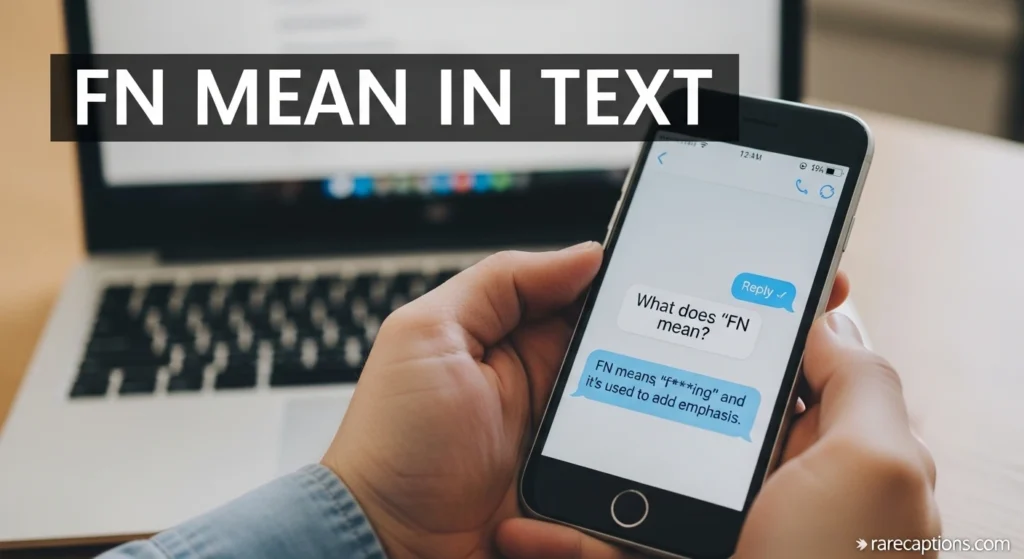
In modern texting, “FN” most commonly stands for “f***ing.” People often shorten it to avoid typing the full word while still expressing strong emotion or emphasis. It acts as an intensifier, similar to saying “really,” “extremely,” or “seriously,” but with more emotional energy.
For example:
- “That movie was fn amazing.”
- “I’m fn tired today.”
- “Why is traffic so fn bad?”
In these cases, “FN” is not meant literally. It simply adds intensity to the sentence. Someone using it may be excited, frustrated, shocked, or passionate about what they are saying.
The popularity of abbreviations like “FN” comes from the fast pace of digital communication. People want to express emotions quickly without typing long phrases. Shortcuts also help create a casual online tone that feels more conversational and less formal.
Interestingly, many people type “fn” in lowercase because it blends naturally into text conversations. It feels softer and more casual than fully spelling out profanity. In some cases, users may not even realize how emotionally strong the abbreviation sounds because it has become normalized online.
Understanding this primary meaning is important because context determines tone. A playful “That’s fn hilarious” feels very different from an angry “This is fn ridiculous.” The abbreviation stays the same, but the emotional energy changes completely depending on the situation.
Why Text Abbreviations Like FN Became So Popular
Text slang didn’t appear randomly. It developed because digital communication changed how people interact. Early texting had character limits, small keyboards, and slower typing speeds. Shortening words became practical.
Over time, abbreviations evolved into part of internet culture itself.
Faster Communication in a Busy World
People now communicate constantly throughout the day. Messages are sent while walking, working, gaming, studying, or multitasking. Short forms like “FN” save time and effort.
Instead of typing:
- “That was really unbelievable.”
Someone types:
- “That was fn insane.”
The message arrives faster and often feels emotionally stronger.
Creating a Casual Digital Identity
Slang also creates belonging. Using abbreviations signals familiarity with online culture. It makes conversations feel relaxed and modern rather than stiff or formal.
A teenager texting friends may naturally use:
- “I’m fn excited.”
But the same person would likely avoid it in a professional email.
That difference shows how slang adapts to social environments.
Emotional Expression in Minimal Words
One reason “FN” became popular is emotional efficiency. Two letters can instantly communicate excitement, anger, surprise, or humor. Online conversations move quickly, and abbreviations help emotions travel just as fast.
In many ways, slang acts like emotional shorthand for digital life.
FN Can Mean Different Things Depending on Context
One of the biggest mistakes people make is assuming every abbreviation has only one meaning. In reality, “FN” changes depending on the platform, topic, and community.
This is why context matters more than the letters themselves.
FN in Gaming
In gaming culture, “FN” often means “Fortnite.” For example:
- “Anyone playing FN tonight?”
- “FN update dropped today.”
Here, the abbreviation has nothing to do with profanity. It simply references the popular video game.
FN as “Full Name”
In forms, documents, or professional chats, “FN” may mean:
- Full Name
Someone might say:
- “Please enter your FN correctly.”
This usage is much more formal and practical.
FN in Music or Fan Communities
Some online groups create their own meanings for abbreviations. In fan communities, “FN” could refer to song titles, artist nicknames, or inside jokes understood only by that audience.
This flexibility explains why internet slang can confuse people from different age groups or communities. The same abbreviation may carry completely different meanings depending on where you encounter it.
Understanding digital language requires paying attention not only to the word itself, but also to the surrounding conversation, tone, and platform.
How Tone Changes the Meaning of FN
Words alone never tell the whole story. Tone shapes interpretation, especially online where facial expressions and voice are missing.
“FN” can sound funny, aggressive, emotional, sarcastic, or enthusiastic depending on how it is used.
Playful Tone
- “That dog is fn adorable.”
This feels lighthearted and expressive. The speaker is emphasizing affection or excitement.
Angry Tone
- “This fn app keeps crashing.”
Now the abbreviation carries frustration and irritation.
Shock or Surprise
- “That ending was fn wild.”
Here, the user expresses disbelief or amazement.
Because texting removes vocal cues, readers rely heavily on context clues like punctuation, emojis, sentence structure, and relationship dynamics. A close friend using “fn” may sound casual and funny, while the same message from a stranger might feel aggressive.
This emotional flexibility is part of why slang spreads so quickly online. It adapts to many moods while remaining short and efficient.
The Role of FN in Online Culture and Humor
Internet culture thrives on exaggeration. Reactions online are often bigger, louder, and more dramatic than everyday speech. “FN” fits perfectly into that style.
People use it to make ordinary situations sound emotionally intense in a humorous way.
For example:
- “I’m fn starving after two hours.”
- “This song got me fn crying.”
Sometimes the exaggeration is intentional comedy. The speaker may not actually be furious or devastated—they are simply amplifying emotion for entertainment.
Meme Culture and Hyperbole
Memes often rely on over-the-top reactions. Abbreviations like “FN” help create that dramatic effect quickly.
A simple statement becomes more expressive:
- “This pizza is good.” vs.
- “This pizza is fn life-changing.”
The second version feels more energetic and memorable.
Shared Internet Language
Using slang creates a sense of participation in online culture. People recognize familiar patterns and instantly understand emotional tone without needing long explanations.
That shared understanding helps communities bond through humor, gaming, fandoms, and social media interactions.
Common Situations Where People Use FN
“FN” appears across many types of conversations. Understanding common scenarios makes interpretation easier.
Casual Friend Conversations
Friends frequently use “FN” casually:
- “You’re fn hilarious.”
- “That was fn embarrassing.”
In these situations, it usually adds emotional emphasis rather than hostility.
Gaming Chats
Gaming communities use fast-paced communication. Abbreviations help players respond quickly during matches or discussions.
Examples:
- “FN servers are down.”
- “That sniper shot was fn crazy.”
Social Media Captions
Social platforms encourage dramatic expression:
- “This sunset is fn beautiful.”
- “I’m fn exhausted after today.”
Captions often combine humor, relatability, and emotional intensity.
Arguments or Rants
In heated conversations, “FN” may increase aggression:
- “Why is this fn happening again?”
Tone matters heavily here. The abbreviation can intensify frustration significantly.
Recognizing these environments helps readers interpret meaning accurately instead of assuming every use sounds offensive or serious.
Why Older Generations Sometimes Misunderstand FN
Digital slang evolves rapidly. Many abbreviations appear and spread within months, especially among younger users. Older generations may struggle because language changes faster online than in traditional communication.
Someone unfamiliar with internet culture might interpret “FN” literally, incorrectly, or not at all.
Generational Communication Gaps
Teenagers often learn slang through TikTok, gaming, memes, and group chats. Older adults may rely on more traditional language patterns.
This creates moments where:
- Younger users assume meanings are obvious.
- Older readers feel confused or excluded.
For example, a parent seeing:
- “That’s fn awesome.”
may misunderstand the emotional tone entirely.
Slang Evolves Faster Than Dictionaries
Traditional dictionaries cannot always keep pace with internet language. Online slang spreads organically through communities rather than official language systems.
As a result, meanings shift constantly.
A phrase popular today might disappear next year, while another abbreviation suddenly becomes mainstream worldwide.
This rapid evolution reflects how digital culture continuously reshapes communication habits.
FN in Gaming Communities Has a Unique Meaning
Gaming culture deserves special attention because “FN” often means something entirely different there.
Most commonly, gamers use “FN” as shorthand for the game Fortnite.
Why Gamers Shorten Everything
Gaming environments prioritize speed. Players communicate during live matches where every second matters.
Instead of typing:
- “Want to play Fortnite?”
Players simply write:
- “Wanna play FN?”
This shorthand becomes second nature within gaming communities.
Community Identity Through Language
Gaming slang also creates social identity. Shared abbreviations signal experience and belonging.
When someone says:
- “FN ranked mode is brutal.”
Other gamers immediately understand the reference without explanation.
Misunderstandings Outside Gaming
Confusion happens when non-gamers interpret gaming abbreviations through general texting culture.
A parent reading:
- “I’m grinding FN tonight.”
might misunderstand completely.
That’s why context is essential. The surrounding conversation usually reveals whether “FN” refers to Fortnite, emotional emphasis, or something else entirely.
The Emotional Psychology Behind Short Slang Terms
There’s a psychological reason abbreviations feel powerful. Short words hit quickly and emotionally, especially in digital communication.
Speed Creates Emotional Impact
Online messages are consumed rapidly. Brief expressions feel immediate and raw.
“FN” works because it delivers emotional intensity without slowing conversation flow.
Compare:
- “I am extremely frustrated.” with:
- “I’m fn annoyed.”
The second feels faster, more emotional, and more conversational.
Informality Feels Authentic
Many users perceive casual slang as more genuine than polished language. Informal speech can create intimacy and relatability.
That’s why friends often text differently than they speak in professional environments.
Emotional Compression
Abbreviations compress large emotions into tiny packages. Two letters can communicate:
- excitement
- rage
- disbelief
- humor
- exhaustion
This emotional efficiency makes slang highly adaptable in modern communication.
When Using FN Can Be Inappropriate
Even though “FN” is common online, it is not suitable everywhere.
Understanding boundaries matters.
Professional Settings
Avoid using “FN” in:
- work emails
- academic writing
- formal presentations
- job applications
Even abbreviated profanity can appear unprofessional.
For example:
- “This project is fn difficult.”
may sound careless or disrespectful in workplace communication.
Conversations With Unfamiliar People
Not everyone interprets slang positively. Some may view it as rude, immature, or aggressive.
Using strong internet slang too early in conversations can create uncomfortable impressions.
Cultural and Generational Differences
Different cultures and age groups react differently to abbreviated profanity. What feels casual to one person may sound offensive to another.
Awareness of audience helps prevent misunderstandings.
Digital communication works best when tone matches the relationship and setting.
How to Tell Which Meaning of FN Someone Intended
If you ever feel confused by “FN,” context clues usually solve the mystery.
Look at the Topic
Gaming discussion?
- Probably Fortnite.
Emotional statement?
- Likely shorthand for profanity-based emphasis.
Official document?
- Probably Full Name.
Read the Entire Sentence
The surrounding words reveal intent:
- “FN tournament starts tonight.”
- “That’s fn ridiculous.”
The meanings become clear once viewed within complete context.
Observe the Platform
Different platforms encourage different language styles:
- Discord and gaming chats favor gaming slang.
- Social media favors emotional slang.
- Professional apps favor formal abbreviations.
Consider the Relationship
Friends often use expressive slang casually. Professional contacts usually do not.
The relationship between speakers provides important emotional context.
Learning slang is less about memorizing definitions and more about reading situations carefully.
Why Slang Like FN Keeps Evolving
Language constantly changes because people change. Every generation creates new ways to express identity, humor, emotion, and belonging.
Digital spaces accelerate that process dramatically.
Internet Trends Move Fast
A single viral meme or influencer can popularize slang globally within days. Platforms like TikTok, Twitch, Discord, and Instagram continuously reshape communication habits.
Communities Invent Their Own Language
Different online groups create specialized vocabularies:
- gamers
- music fans
- sports communities
- meme creators
- streamers
These communities develop shorthand that outsiders may not immediately understand.
Slang Reflects Human Creativity
At its core, slang represents creativity. People naturally experiment with language to make conversations faster, funnier, and more expressive.
“FN” is just one example of how communication adapts to modern digital life.
Tomorrow, new abbreviations will emerge and reshape conversations all over again.
Practical Tips for Understanding Modern Text Slang
Trying to memorize every internet abbreviation is impossible. New terms appear constantly. Instead, focus on practical strategies.
Pay Attention to Context
Context solves most confusion. Read surrounding messages carefully before assuming meaning.
Don’t Panic Over Unknown Slang
Even frequent internet users encounter unfamiliar abbreviations. Language evolves for everyone.
Ask When Necessary
If confusion matters, simply ask:
- “What does FN mean here?”
Most people appreciate curiosity more than incorrect assumptions.
Learn Platform Culture
Different apps develop different slang habits. Spending time observing conversations helps naturally build understanding.
Focus on Emotional Intent
Sometimes exact definitions matter less than emotional tone. Ask yourself:
- Is the person joking?
- excited?
- angry?
- casual?
Understanding emotion often clarifies meaning faster than literal interpretation.
Digital fluency comes gradually through exposure and observation rather than memorization alone.
Conclusion
“FN” may look like a tiny abbreviation, but it reflects something much larger about modern communication. In texting, gaming, and social media culture, those two letters can express excitement, frustration, humor, identity, or community belonging depending on the situation. Most commonly, it serves as shorthand for emotional emphasis, while in gaming spaces it often refers to Fortnite. In formal settings, it may even mean “Full Name.”
The key lesson is that context shapes meaning. Tone, platform, relationship, and surrounding words all influence interpretation. Digital language evolves quickly because people constantly search for faster, more expressive ways to connect online.
Rather than fearing slang, it helps to approach it with curiosity. Internet language is ultimately about human expression—people trying to communicate emotion, personality, and connection in a fast-moving digital world. Understanding terms like “FN” simply makes navigating those conversations easier, clearer, and more relatable.
FAQs
What does FN usually mean in text?
Most commonly, “FN” is shorthand for “f***ing,” used to add emphasis or emotional intensity in casual conversations.
Does FN always mean something offensive?
No. While it often relates to profanity-based emphasis, many people use it casually without aggressive intent. Context matters greatly.
What does FN mean in gaming?
In gaming communities, “FN” usually stands for Fortnite, especially in chats, livestreams, or multiplayer discussions.
Is FN appropriate for professional communication?
Generally, no. Because it is often associated with profanity or informal slang, it is best avoided in workplace or academic settings.
Why do people shorten words like this online?
People shorten words for speed, convenience, emotional expression, and cultural familiarity within online communities.
Can FN have multiple meanings in the same conversation?
Yes. Different people or communities may use “FN” differently depending on context, platform, or topic.
How can I tell which meaning of FN is correct?
Look at the surrounding conversation, topic, tone, and platform. Gaming discussions often mean Fortnite, while emotional statements usually use it as emphasis.
Is FN popular among younger generations?
Yes. Younger internet users commonly use abbreviations like “FN” in texting, memes, gaming chats, and social media conversations.
Are abbreviations like FN becoming more common?
Yes. Digital communication continues to encourage shorter, faster, and more emotionally expressive forms of language.
What should I do if I don’t understand a slang term?
The best approach is to observe context or politely ask for clarification. Slang changes constantly, so confusion is completely normal.