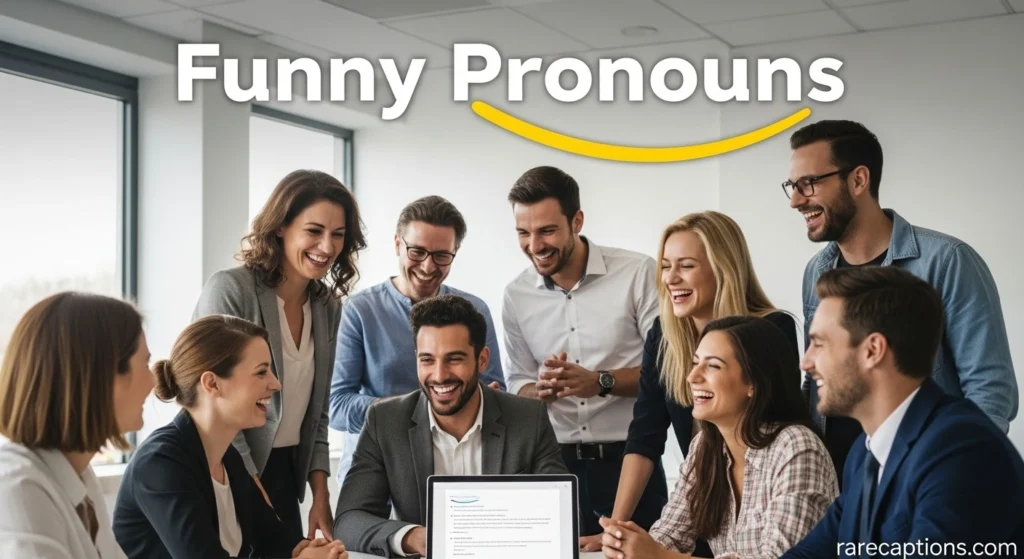
Picture this: you open a social media profile expecting the usual “he/him” or “she/her,” but instead you find “your majesty/your majesty,” “bee/buzz,” or “chaos/gremlin.” Instantly, you pause. Maybe you laugh. Maybe you feel confused. Maybe you admire the creativity. In a digital world where bios are tiny windows into personality, funny pronouns have become a surprisingly powerful form of self-expression.
What started as internet humor has evolved into something much more layered. Funny pronouns can be playful jokes, social commentary, identity experiments, or simply a way to make someone smile. They often reveal a person’s sense of humor, creativity, or online culture in just a few words. At the same time, they can spark conversations about language, identity, inclusivity, and how people present themselves online.
The rise of funny pronouns says a lot about modern communication. People are no longer using the internet only to share information—they are using it to build personality and connection. Whether someone uses funny pronouns as a joke among friends or as a creative extension of identity, the trend reflects how language keeps evolving in surprising and deeply human ways.
What Are Funny Pronouns?
Funny pronouns are humorous, exaggerated, playful, or unconventional pronouns people use online or in casual social settings. Unlike traditional pronouns such as “he,” “she,” or “they,” these are often created for entertainment, irony, creativity, or personal branding.
Examples include phrases like:
- “your/highness”
- “rat/rats”
- “meme/lord”
- “cry/aboutit”
- “ghost/ghostself”
- “no/one”
Some are completely absurd on purpose, while others are inspired by internet culture, fandoms, gaming communities, or niche humor. A teenager might use “sleep/deprived” in their bio as a joke about school stress. A gamer might write “tank/tankself” to reference their role in online games.
Funny pronouns often blur the line between identity and comedy. That’s part of what makes them interesting. In many cases, they are not meant to replace real pronouns in serious conversations. Instead, they act like personality stickers attached to someone’s online identity.
The popularity of funny pronouns also reflects a broader shift in internet communication. People increasingly use humor to express emotions, build communities, and soften awkward social interactions. A funny pronoun can say, “I don’t take myself too seriously,” without needing a full explanation.
At their core, funny pronouns are less about grammar rules and more about creativity, social connection, and self-expression in the digital age.
Why Funny Pronouns Became Popular Online
The internet rewards originality. In crowded online spaces, people constantly search for ways to stand out, and funny pronouns became one of those creative tools.
Social media platforms encourage short-form identity expression. You only get a few lines in a bio, so every word matters. Adding something unexpected instantly captures attention. A profile that says “he/him” may feel standard, while “pizza/pizzaself” feels memorable.
Another reason for their popularity is meme culture. Online humor thrives on absurdity and randomness. Funny pronouns fit perfectly into this environment because they combine identity language with comedy. They surprise people in the same way a good meme does.
The Influence of Gen Z Humor
Gen Z humor often embraces irony, exaggeration, and self-awareness. Funny pronouns reflect all three. Someone writing “trash/can” pronouns might not literally expect others to use them. Instead, they are participating in a shared comedic style that values chaos and playful exaggeration.
The Role of Community
Funny pronouns also create social bonding. Friends in fandoms, gaming servers, or niche communities often invent pronouns as inside jokes. These small details strengthen group identity.
For example, a group obsessed with frogs might jokingly adopt “frog/frogself.” It becomes more than a joke—it becomes part of belonging.
In many ways, funny pronouns became popular for the same reason memes become popular: they are fast, expressive, creative, and emotionally relatable.
The Difference Between Funny Pronouns and Real Identity Pronouns
One of the biggest misunderstandings about funny pronouns is the assumption that they always mock gender identity discussions. In reality, the situation is more nuanced.
Traditional pronouns communicate how someone wants to be addressed in everyday interaction. They serve an important role in identity and respect. Funny pronouns, on the other hand, are often used casually, humorously, or symbolically.
For example, someone may genuinely use “they/them” while also jokingly listing “coffee/coffee-self” in their bio. The funny pronouns become an extension of personality rather than a replacement for real communication preferences.
When Humor and Identity Overlap
Sometimes funny pronouns are connected to identity exploration. Young people experimenting with self-expression may use playful language to test comfort levels or communicate feelings indirectly.
A person who feels disconnected from traditional labels might use unusual pronouns partly as humor and partly as exploration. Humor can make self-discovery feel safer.
Respect Still Matters
Even in humorous spaces, context matters. Some people use funny pronouns purely as jokes among friends, while others attach emotional meaning to them. Assuming every unusual pronoun is “fake” or meaningless can dismiss someone’s personal experience.
The key difference lies in intention. Funny pronouns are usually playful, but they still exist within broader conversations about language, identity, and expression.
How Humor Makes Language More Personal
Language becomes memorable when it carries emotion. Funny pronouns work because they turn ordinary grammar into something personal and emotionally expressive.
Think about how often people use humor to cope with stress. A college student writing “tired/exhausted” pronouns may actually be expressing genuine burnout in a lighthearted way. The joke creates connection because others instantly understand the feeling.
Humor also lowers social barriers. A stranger with funny pronouns in their profile can seem more approachable because laughter creates familiarity.
Tiny Words With Big Personality
Pronouns are small words people normally overlook. Turning them into jokes forces people to notice them again. Suddenly, grammar becomes creative.
That creativity helps people shape their online identities. Someone using “star/starself” may want to appear dreamy and artistic. Someone using “chaos/chaoself” may want to project playful unpredictability.
Humor as Emotional Protection
Sometimes funny pronouns hide vulnerability. Self-deprecating humor like “failure/failureself” may reflect insecurity beneath the joke.
Online humor often works this way. People package real emotions inside exaggerated comedy because it feels safer than direct honesty.
Funny pronouns reveal how language can carry far more emotional meaning than grammar textbooks ever imagined.
The Funniest Types of Pronouns People Use
Funny pronouns come in many styles, and each type reflects a different form of humor or personality.
Meme-Based Pronouns
These are inspired by internet culture and viral jokes.
Examples:
- “sus/sussy”
- “bruh/bro”
- “yeet/yeetself”
These pronouns thrive in gaming communities and meme-heavy spaces.
Food-Themed Pronouns
Food humor is universal, which makes these especially popular.
Examples:
- “pizza/pizzaself”
- “bean/beanself”
- “ramen/ramenself”
They often signal comfort, silliness, or relatability.
Fantasy or Aesthetic Pronouns
These lean into imagination and visual identity.
Examples:
- “moon/moonself”
- “ghost/ghostself”
- “dragon/dragonself”
These are common in artistic and fandom communities.
Self-Deprecating Pronouns
Some people turn their struggles into jokes.
Examples:
- “sleep/deprived”
- “panic/panicself”
- “lost/confused”
These resonate because they reflect common emotional experiences.
The funniest pronouns usually succeed because they combine surprise, personality, and relatability. Even ridiculous examples often contain a small truth people recognize in themselves.
Funny Pronouns and Internet Identity Culture
Online identity is different from real-world identity. On the internet, people often exaggerate certain traits to create memorable personas. Funny pronouns fit naturally into this culture.
A shy person offline might become wildly expressive online. Someone serious in daily life may adopt absurd humor in digital spaces. Funny pronouns allow people to shape how others perceive them instantly.
Social media rewards personality performance. Bios, usernames, and profile pictures all work together to create a character-like version of the self.
Digital Personas Are Flexible
Unlike offline life, internet identity changes quickly. Someone may use one set of funny pronouns today and different ones next month depending on mood, fandom, or trends.
This flexibility makes online spaces feel playful and experimental.
Humor as Social Currency
Funny people often gain attention online faster than serious people. Clever bios get screenshots, reposts, and engagement. Funny pronouns become tiny tools for visibility.
In some communities, creative pronouns are almost an art form. People compete to invent the funniest or most absurd combinations possible.
This trend highlights how modern identity is increasingly shaped by performance, creativity, and humor-driven communication.
Why Some People Love Funny Pronouns
For supporters, funny pronouns represent freedom of expression and creativity. They see them as harmless fun that makes online interaction more entertaining.
People enjoy them because they break expectations. Language usually follows strict rules, so playful pronouns feel refreshing.
They Encourage Creativity
Funny pronouns invite people to think differently about language. Instead of treating grammar as rigid, they transform it into a creative playground.
A writer, artist, or gamer may enjoy inventing pronouns simply because it feels imaginative.
They Build Connection
Shared humor creates fast emotional bonds. Seeing “caffeine/caffeineself” in someone’s bio may instantly connect coffee lovers.
These tiny jokes can make strangers feel familiar.
They Reduce Formality
Funny pronouns also make digital spaces feel less stiff. Instead of overly polished profiles, they create a sense of authenticity and casual fun.
Many people appreciate the reminder that online interaction does not always need to be serious or perfectly curated.
Why Some People Dislike Funny Pronouns
Not everyone enjoys the trend. Critics often argue that funny pronouns create confusion or trivialize serious conversations about gender identity.
Some people feel uncomfortable because they struggle to tell when someone is joking versus expressing something meaningful. The ambiguity can lead to misunderstandings.
Concerns About Respect
A common criticism is that humorous pronouns may unintentionally mock individuals who rely on pronouns for genuine identity recognition.
For people who have fought to normalize pronoun respect, exaggerated jokes can sometimes feel dismissive.
Generational Differences
Older internet users may see funny pronouns as unnecessary or attention-seeking because they grew up with more traditional communication styles.
Meanwhile, younger users often see them as normal internet humor.
Communication Challenges
In professional or formal spaces, funny pronouns may confuse people unfamiliar with internet culture. What feels playful in a gaming server may feel inappropriate in a workplace setting.
These criticisms do not necessarily mean funny pronouns are “bad.” They simply reveal how humor, identity, and communication can mean different things to different audiences.
The Psychology Behind Funny Pronouns
Humans naturally use humor to build identity and social connection. Funny pronouns are one example of that psychological behavior.
People want to feel seen, unique, and understood. A creative pronoun offers instant emotional signaling.
Someone using “chaos/gremlin” may be communicating:
- “I’m messy.”
- “I’m playful.”
- “I enjoy absurd humor.”
- “I don’t want to appear overly serious.”
All of that meaning gets compressed into two words.
Humor Creates Emotional Safety
Humor allows people to express themselves without full vulnerability. Saying “I’m emotionally overwhelmed” feels heavy. Saying “panic/panicself” feels lighter.
The joke softens the emotional exposure.
Identity Through Language
People often personalize language to feel more ownership over communication. Nicknames, slang, emojis, and funny pronouns all serve similar psychological purposes.
They transform generic communication into personal expression.
Funny pronouns may seem silly on the surface, but underneath them lies a deeply human desire: the desire to be noticed, understood, and connected.
Funny Pronouns in Friend Groups and Communities
Funny pronouns become even more entertaining inside close-knit groups. Friends often create pronouns based on shared memories, inside jokes, or personality traits.
A friend known for always eating noodles might become “ramen/ramenself.” Another obsessed with horror movies might adopt “ghost/haunt.”
Inside Jokes Strengthen Bonds
Inside jokes make people feel included. Funny pronouns can function like secret codes that outsiders may not fully understand.
That shared understanding strengthens community identity.
Gaming and Fandom Spaces
Gaming servers, anime fandoms, and creative communities are especially known for playful pronoun culture. These environments already encourage roleplay and imaginative identity-building.
Funny pronouns become part of the atmosphere.
Humor Creates Belonging
When everyone participates, funny pronouns stop being individual jokes and become group traditions.
This explains why the trend spreads so easily online. People are not only chasing laughs—they are chasing connection and belonging.
When Funny Pronouns Cross the Line
Humor always depends on context. What feels funny in one setting may feel disrespectful in another.
Funny pronouns can cross the line when they are used specifically to mock or harass people. Intention matters.
For example, using absurd pronouns to deliberately ridicule someone’s identity is very different from friends joking playfully among themselves.
Context Changes Meaning
A private Discord server filled with close friends has different social expectations than a classroom or workplace.
People often forget that internet humor does not translate equally across all spaces.
Knowing Your Audience
Good humor considers audience reactions. If people are uncomfortable or hurt, it may be worth reconsidering the joke.
This does not mean humor should disappear. It simply means awareness matters.
The Difference Between Playfulness and Cruelty
Funny pronouns work best when they create laughter without targeting vulnerable people. Humor that punches down often creates division instead of connection.
The healthiest online communities usually balance creativity with empathy.
What Funny Pronouns Teach Us About Modern Communication
Funny pronouns reveal something important about how communication is changing.
People no longer use language only to exchange information. They use it to perform identity, express emotion, signal humor, and build social belonging.
In previous generations, grammar felt formal and fixed. Today, internet culture constantly reshapes language in real time.
Language Is Becoming More Flexible
Memes, emojis, abbreviations, and funny pronouns all show how adaptable communication can be.
Traditional grammar rules still exist, but online culture treats language more like a creative toolkit.
Personality Matters More Than Ever
Digital communication removes many physical cues like facial expressions and tone. As a result, people rely on creative text-based signals to express personality.
Funny pronouns help fill that gap.
Humor Shapes Online Culture
Modern internet culture is built around humor. Even serious emotions are often expressed through jokes.
Funny pronouns reflect this shift perfectly. They are simultaneously jokes, identity markers, and social signals.
In many ways, they represent the internet itself: chaotic, creative, emotional, confusing, and deeply human.
How to Use Funny Pronouns Without Creating Confusion
If someone wants to use funny pronouns, balance is important. The goal is usually expression and humor—not unnecessary misunderstanding.
Pair Them With Standard Pronouns
Many people list standard pronouns first and funny pronouns second.
For example:
- “they/them | chaos/gremlin”
- “he/him | coffee/coffeeself”
This keeps communication clear while preserving personality.
Use Them in Casual Spaces
Funny pronouns work best in relaxed environments like social media, gaming communities, or friend groups.
In professional settings, simplicity is often more practical.
Understand the Audience
Different communities respond differently to humor. A joke that thrives on TikTok may confuse people on LinkedIn.
Being aware of context helps avoid unnecessary conflict.
Ultimately, funny pronouns are most successful when they create joy, creativity, or connection without making communication harder.
The Future of Funny Pronouns
Funny pronouns are likely to continue evolving alongside internet culture. As online communication becomes more personalized, people will keep experimenting with creative identity markers.
Some trends will disappear quickly. Others may become long-term parts of digital culture.
More Blending of Humor and Identity
Future online spaces may blur the lines between jokes, aesthetics, and identity even further. Pronouns could become part of larger digital self-branding systems.
AI and Virtual Spaces
As virtual worlds and AI-driven social platforms grow, people may create increasingly imaginative pronoun systems tied to avatars and online personas.
Fantasy-inspired pronouns may become even more common.
Language Will Keep Changing
Every generation reshapes language. Funny pronouns are simply one chapter in that ongoing story.
What seems strange today may feel normal tomorrow. Internet culture moves fast, and communication evolves with it.
Rather than viewing funny pronouns as meaningless trends, it may be more useful to see them as evidence of humanity’s endless creativity with language.
Conclusion
Funny pronouns may seem like small internet jokes, but they reveal surprisingly deep truths about modern communication. They show how people use humor to express identity, build friendships, ease vulnerability, and stand out in crowded digital spaces. For some, they are harmless comedy. For others, they are creative self-expression tied to personality or community culture.
The conversation around funny pronouns also highlights a larger shift in language itself. Communication today is faster, more visual, more emotional, and far more flexible than it once was. Tiny words in a social media bio can now carry humor, emotion, identity, and belonging all at once.
Whether you find funny pronouns hilarious, confusing, clever, or unnecessary, they reflect something undeniably human: the desire to be noticed, understood, and connected. And in a world increasingly shaped by online interaction, that desire continues to reshape language in creative and unexpected ways.
FAQs
What are funny pronouns?
Funny pronouns are playful, humorous, or unconventional pronouns people use online for jokes, creativity, or personality expression.
Are funny pronouns meant to be taken seriously?
Usually, funny pronouns are used casually or humorously rather than as strict communication preferences, though context can vary.
Why do people use funny pronouns in their bios?
People use them to show personality, join internet humor trends, connect with communities, or make their profiles more memorable.
Can funny pronouns offend people?
Sometimes. If used to mock identity discussions or disrespect others, they can upset people. Context and intention matter.
Are funny pronouns only popular with Gen Z?
Gen Z popularized many funny pronoun trends, but people of different ages participate in internet humor culture.
Do funny pronouns replace regular pronouns?
Usually not. Many people pair funny pronouns with standard pronouns like “he/him,” “she/her,” or “they/them.”
Why are funny pronouns so common in fandoms and gaming spaces?
These communities often encourage creativity, roleplay, humor, and imaginative identity-building, making funny pronouns fit naturally.
Will funny pronouns remain popular in the future?
Most likely, yes. As internet culture evolves, people will probably continue experimenting with humorous and creative forms of self-expression.